The Relational Database


  • Database:

      • A collection of data that can be accessed electronically (through a computer system

  • Relational Database:

      • A collection of data that are organized as a set of tables (and can be accessed electronically through a computer system)

      • Relational databases are accessed using the Structured Query Language, a.k.a.: SQL

The most popular database systems in 2022

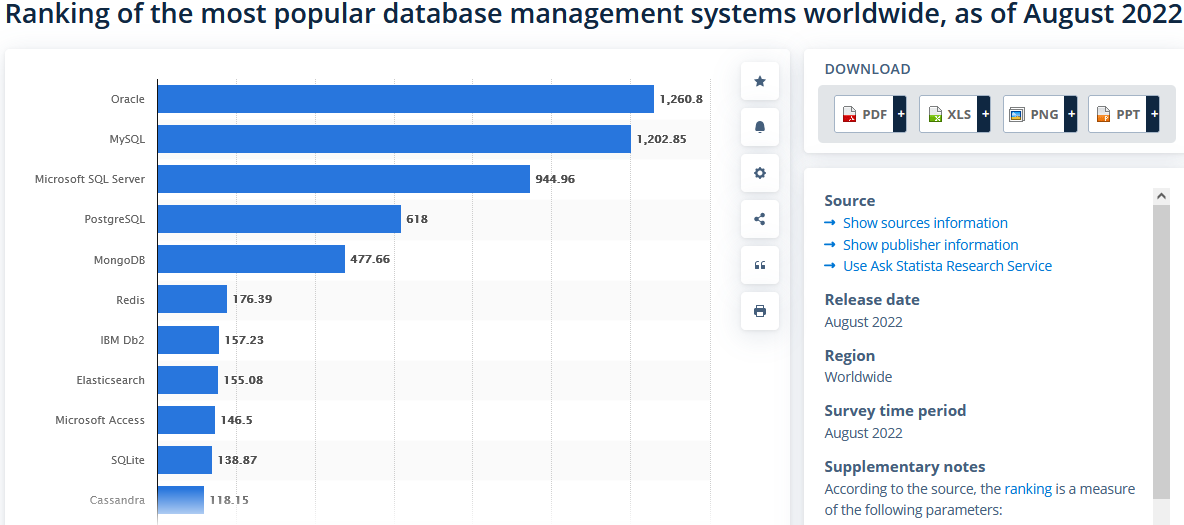
  • The most popular database systems today ranked:

  • The most popular database used today is the Relational Database !!
    Supporting data: www.statista.com

Structure of a relational database

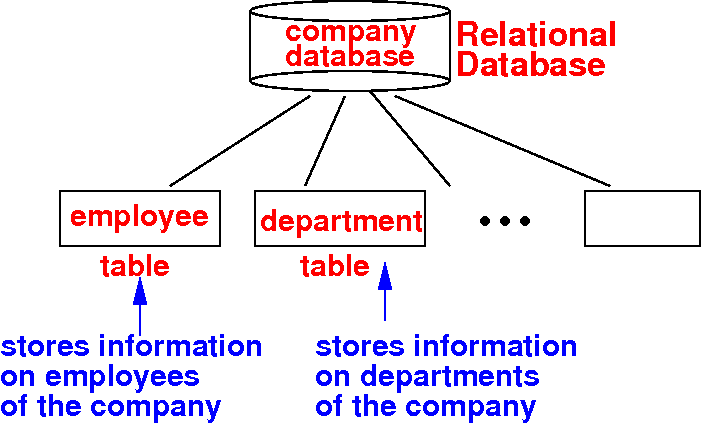
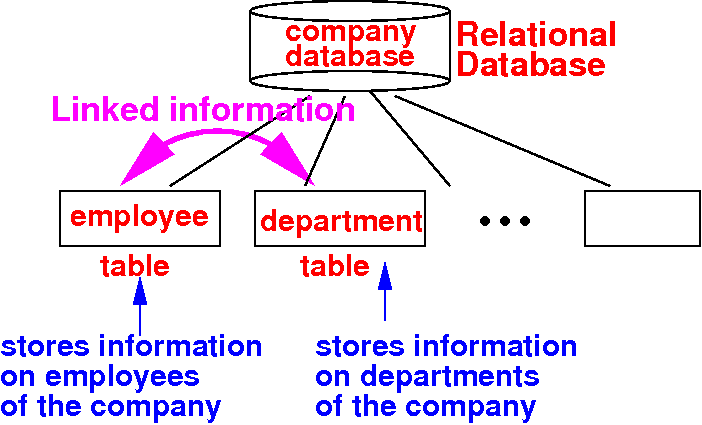
  • A relational database consist of a number of relations (a.k.a.: tables)

  • A table stores information on one type of entity

  • Example database on a company:

Relational Database Table (a.k.a. a relation)

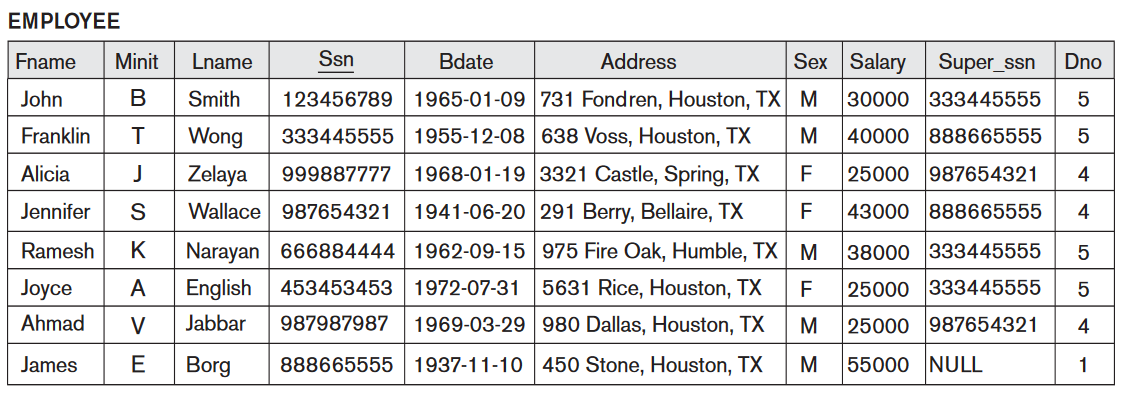
  • A table/relation in a relational database consists of:

      • A table/relation name
      • One of more columns (called attributes) identifed by an attribute/column name
      • Zero or more rows of data (called tuples)

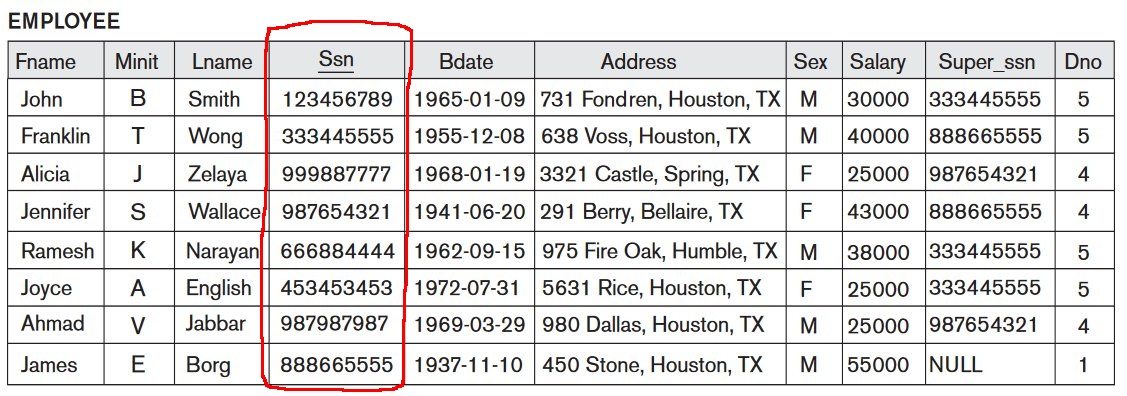
    Example 1: the employee table

Relational Database Table (a.k.a. a relation)

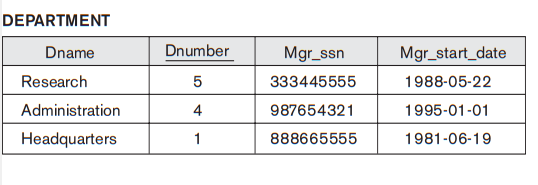
  • A table/relation in a relational database consists of:

      • A table/relation name
      • One of more columns (called attributes) identifed by an attribute/column name
      • Zero or more rows of data (called tuples)

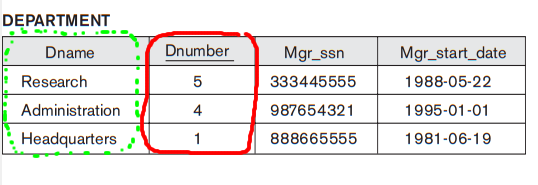
    Example 2: the department table

Linking information in different tables though a key

  • Information stored in different tables can be linked:

    Example: every employee works in some department

  • Information stored in different tables are linked through key attribute(s)
    (or key for short)

Key

  • A key = a (smallest possible) set of attributes that can be used to identify a tuple (= row) in a relation (= table)

    Example: SSN is a key in the Employee relation

    Property of a key:   each SSN value is unique per employee !!!

Key

  • A key = a (smallest possible) set of attributes that can be used to identify a tuple (= row) in a relation (= table)

    Quiz: can you find the key(s) in the department relation ?

    Answer:

Key

  • A key = a (smallest possible) set of attributes that can be used to identify a tuple (= row) in a relation (= table)

    Quiz: can you find the key(s) in the department relation ?

    Answer:   dnumber (and possibly dname)

The meaning of the information in a relation


  • The meaning of the data in a relation must be described externally

  • Attribute names are usually chosen to convey the meaning

    Example:

      • fname = name of the employee
      • minit = middle initial of the employee
      • ...
      • super_ssn = the SSN of the supervisor of the employee
      • dno = the department number of the department that the employee is working in.

Interpreting the information in a relation

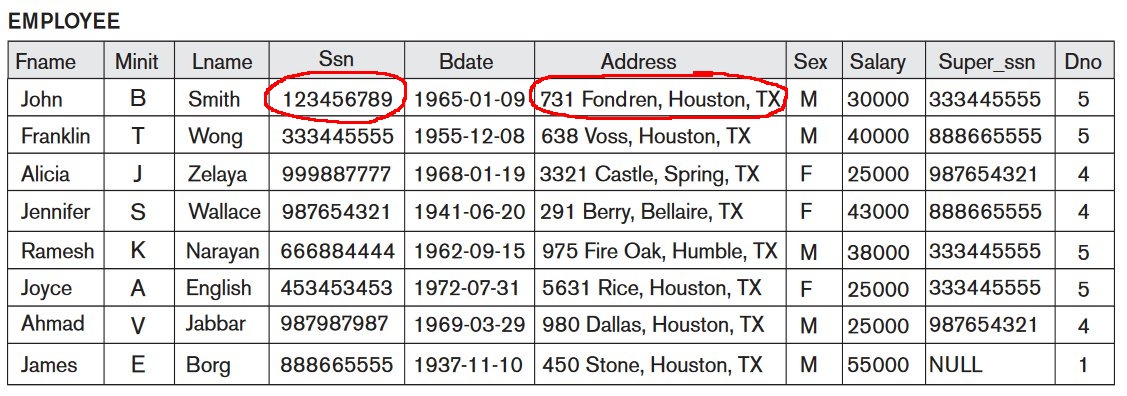
Can you find the address of the employee whose SSN is 123456789 ?

  • Employee relation:

  • Answer:

Interpreting the information in a relation

Can you find the address of the employee whose SSN is 123456789 ?

  • Employee relation:

  • Answer:   731 Fondren, Houston, TX

Interpreting the information in a relation

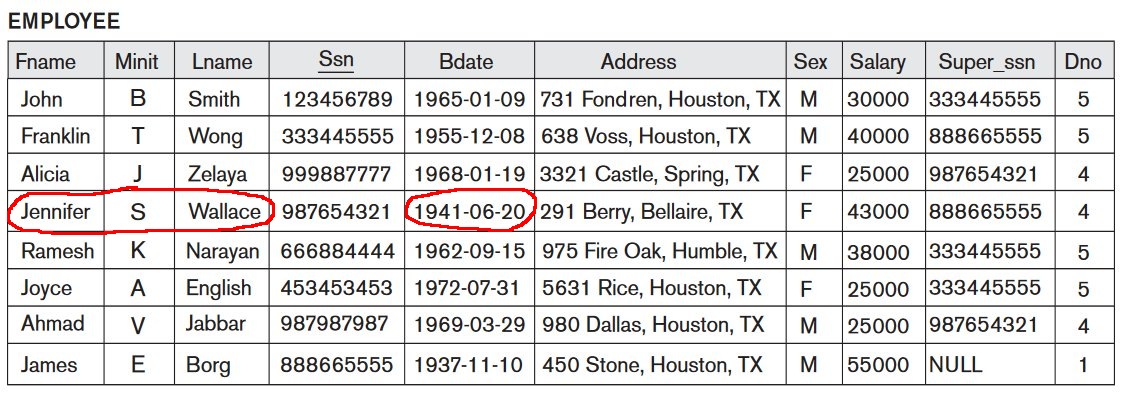
Can you find the Birthdate of the employee Jennifer Wallace ?

  • Employee relation:

  • Answer:

Interpreting the information in a relation

Can you find the Birthdate of the employee Jennifer Wallace ?

  • Employee relation:

  • Answer:   1941-06-20

Interpreting the information in a relation

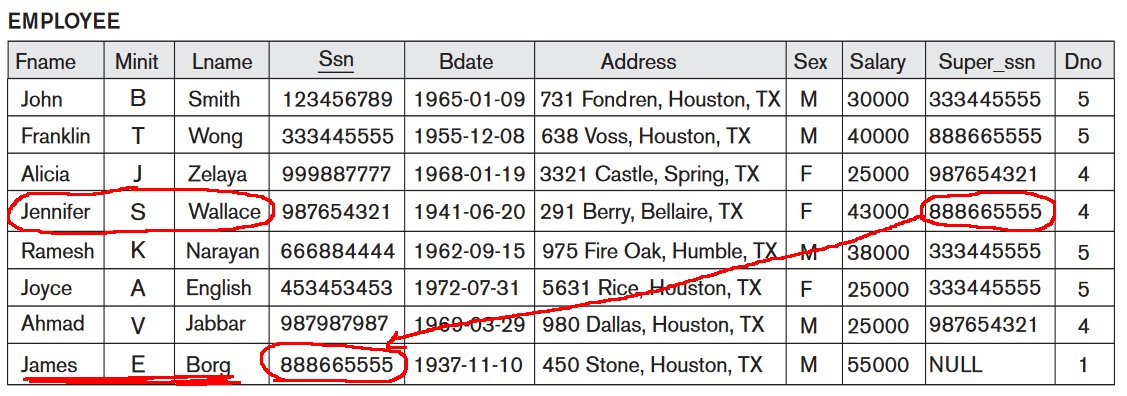
What is the name of the supervisor of employee Jennifer Wallace ?

  • Employee relation:

  • Answer:

Interpreting the information in a relation

What is the name of the supervisor of employee Jennifer Wallace ?

  • Employee relation:

  • Answer:   James Borg    (Notice that you have used a key that links information)

Interpreting the information in a relation

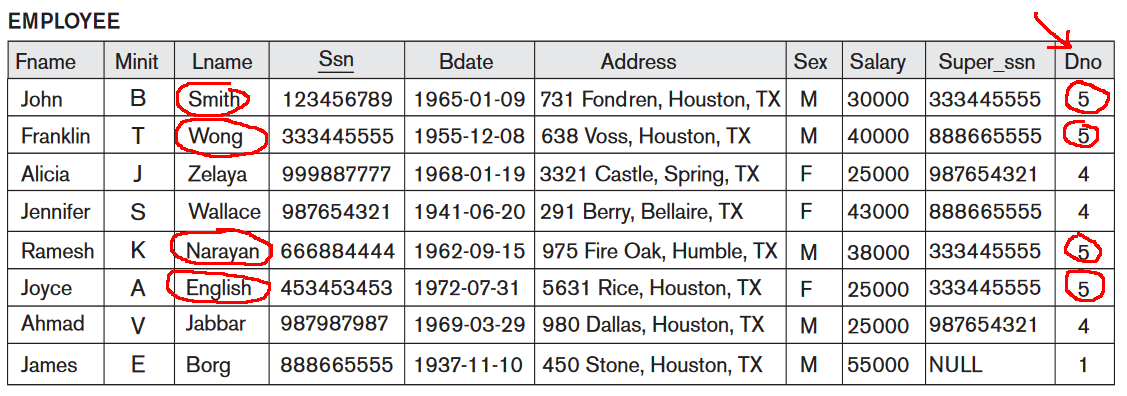
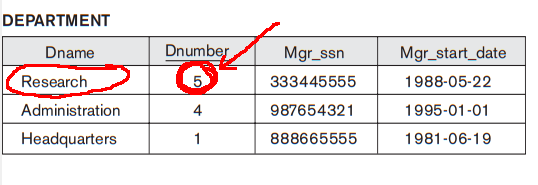
Who work in the Research department ?

  • Employee relation:
  • Department relation:

  • Answer:  

Interpreting the information in a relation

Who work in the Research department ?

  • Employee relation:
  • Department relation:

  • Answer:   Smith, Wang, Narayan and English    (Information linking !)

Database Management System (DBMS)


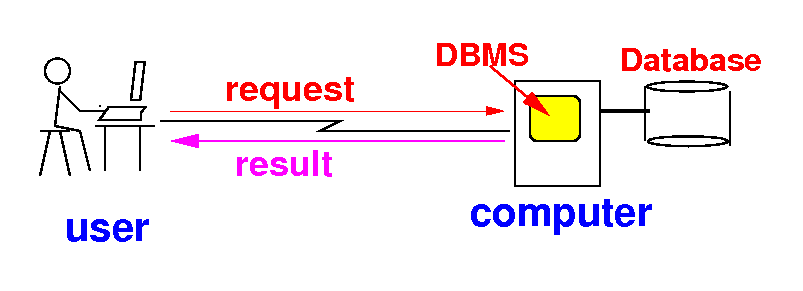
  • Database Management System (DBMS) = computer software (program) that is dedicated to process access requests to a database

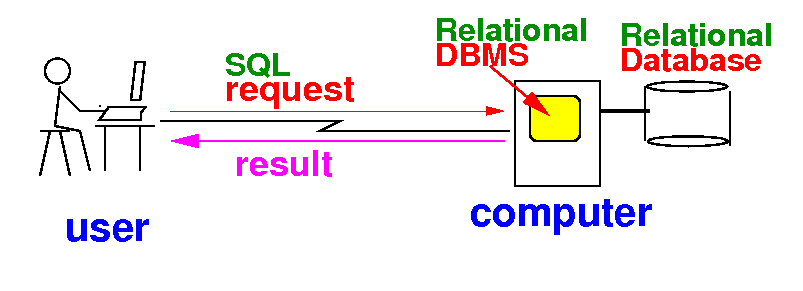
  • Relational DBMS (RDBMS) = computer software (program) that is dedicated to process access requests to a relational database

  • Popular RDBMS:

  • I am using MySQL for this course.

How to access a database


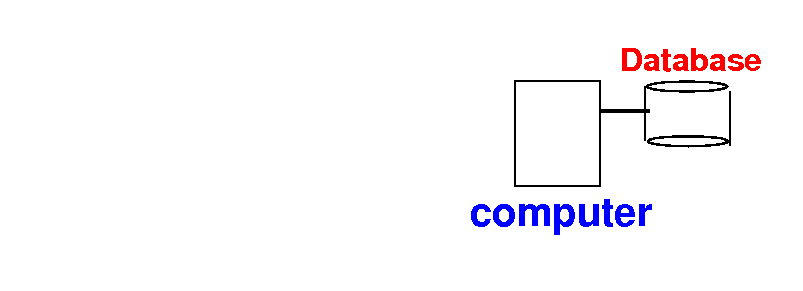
  • The database is stored on some computer:


How to access a database


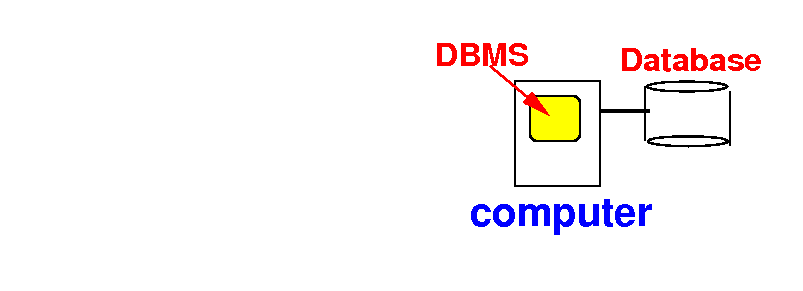
  • The DBMS (program) runs on the computer an manages the database:


How to access a database


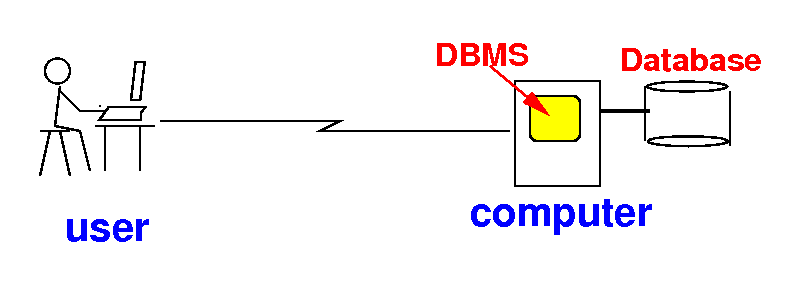
  • Users are connected to the database system through the Internet:


How to access a database


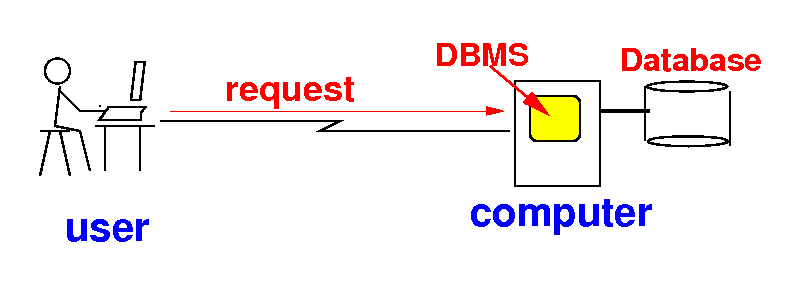
  • Users can send requests to the DMBS:


How to access a database


  • The DBMS processes the request and sends the result back to the user:


How to access a relational database


  • A relational DBMS is accessed using the SQL (programming) language:

  • SQL is widely used in the corporate world to manage sales, order and employee information !

Example: accessing a relational DBMS