Review: computer memory
-
Recall
that
the
computer memory
consists of a series of
electical switches and
each switch can
store/remember
one of the
value of 0 or
1:
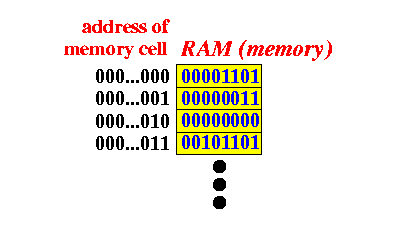
- We have also
learned that:
- The
computer memory
contains
the computer program !
|
- Therefore:
- A
computer program is
a bunch of
binary numbers !!
|
|
How people program a
computer around
1945
- Programmers would
set switches to
on/off to
write out the
computer instruction
in binary:
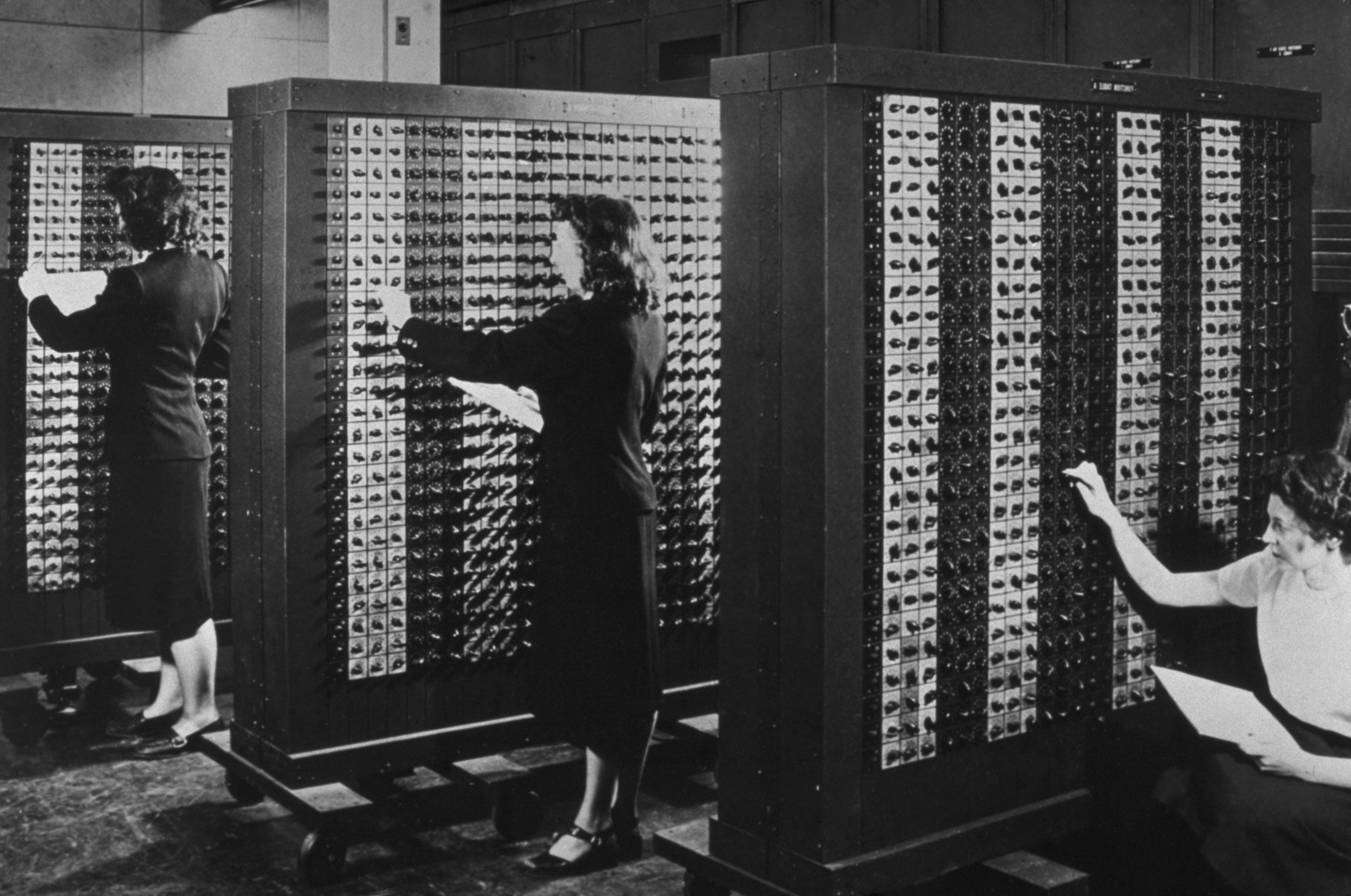
- Programming was a
very tedious
task in the
pioneer days !
|
How people program a
computer around
1950
- We invented
the
assembler programming language
which are
mnemonics for
each binary machine instruction:
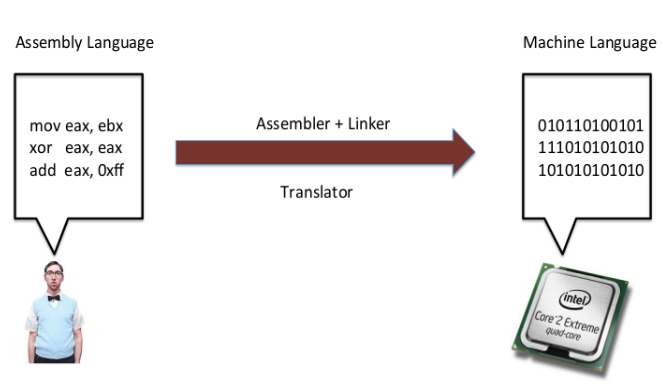
- A (simple)
translation
program
can an
assembler translates
an assembler program
to binary machine code
|
How people program a
computer around
1957
- The first
programming language
(Fortran) was
invented:
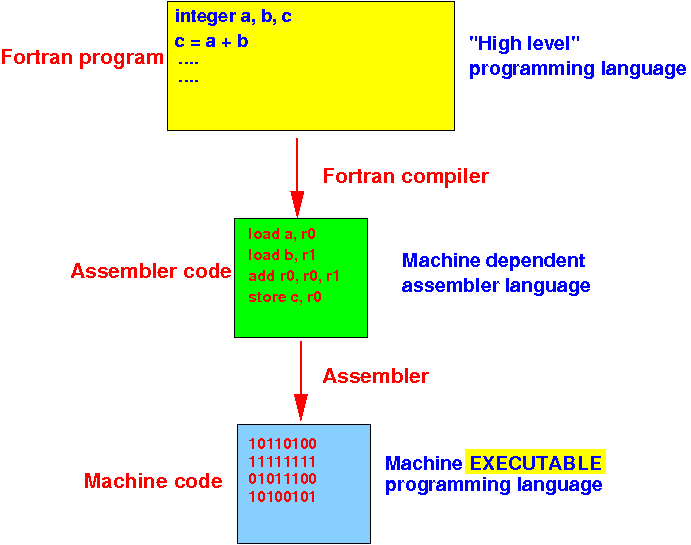
- A complex
translation
program
can an
compiler translates
a Fortran program
to assembler code
|
Demo how the compiler translates a
C program
into assembler code
- I don't have
a Fortran compiler
- I do have
a C compiler
- Here's a small C program:
int a, b, c;

int main()
{
   c = a + b;
}
|
- I will show you the
output
(= assembler program)
generated by
the C compiler
|
DEMO:
demo/01-basics/01-compiler/assembler.c
(in folder
~/c/OutSchool/CS/AP-CS/)
Programming in Java
- A Java program needs to
be translated ("compiled") before
you can run the
program:
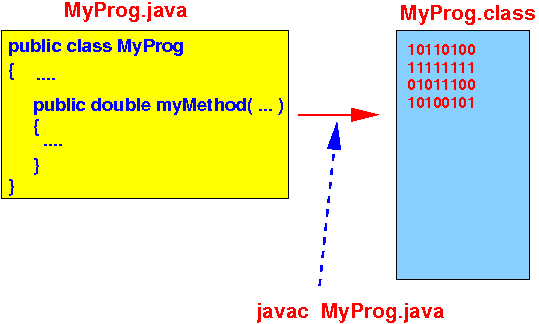
- The Java Compiler program
is called javac
- But we will be
using an
"Integrated Development Environment" (IDE)
called
BlueJ that
make compiling and
running
Java programs
very easy
|
DEMO:
demo/01-basics/01-compiler/hello.java
(in folder
~/c/OutSchool/CS/AP-CS/)
❮
❯