Defining
and invoking
a method
Example of a method definition and method invocation:
public class Max
{
    public static void main(String[] args)
    {
        int z, x = 3, y = 7;

        z = max(x,y);                    // Method invocation
    }

    public static int max(int a, int b)  // Method definition
    {
        int result;

        if ( a > b )
            result = a;
        else
            result = b;

        return result;
    }
}
|
DEMO: demo/06-methods/02-method/Max.java
Demo: show the activation records of main( ) and max( ) when stopped inside max( )
Defining
and invoking a method
Syntax and structure of a method definition and method invocation:
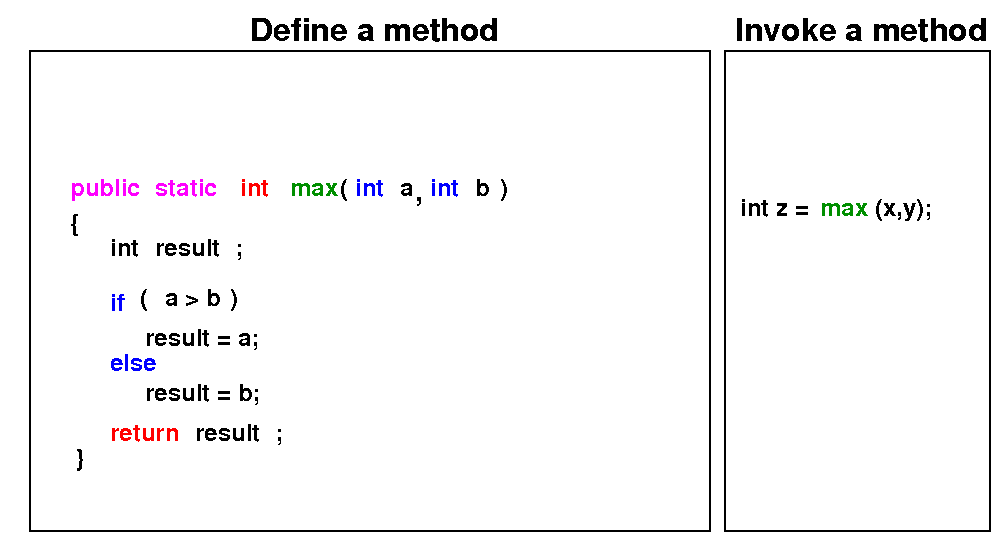
We will learn some computer jargon (terminology) about methods next
Defining
and invoking
a method
A method definition consists of (1) a method header and (2) a method body:
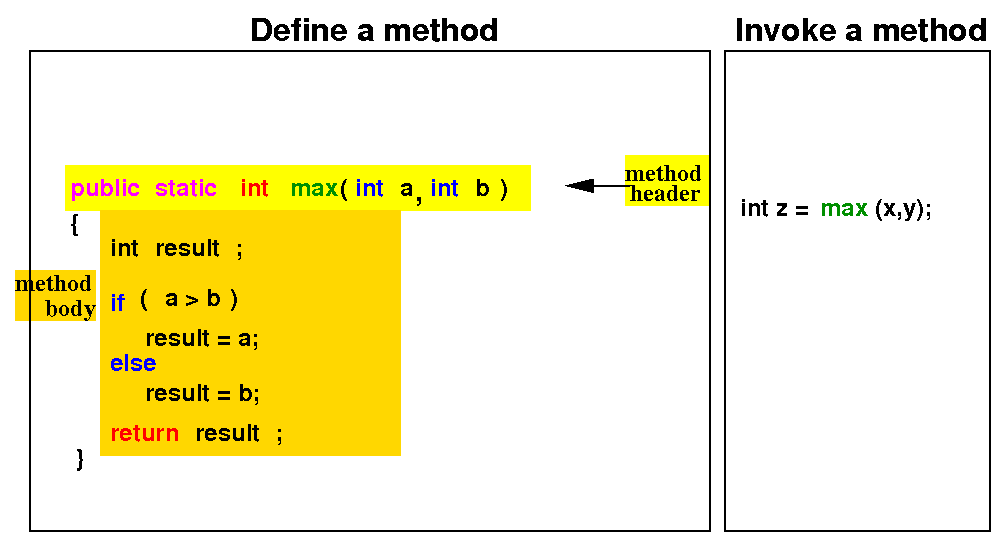
Defining
and invoking
a method
The method header consists of modifiers, return value type, method name, and (formal) parameters:
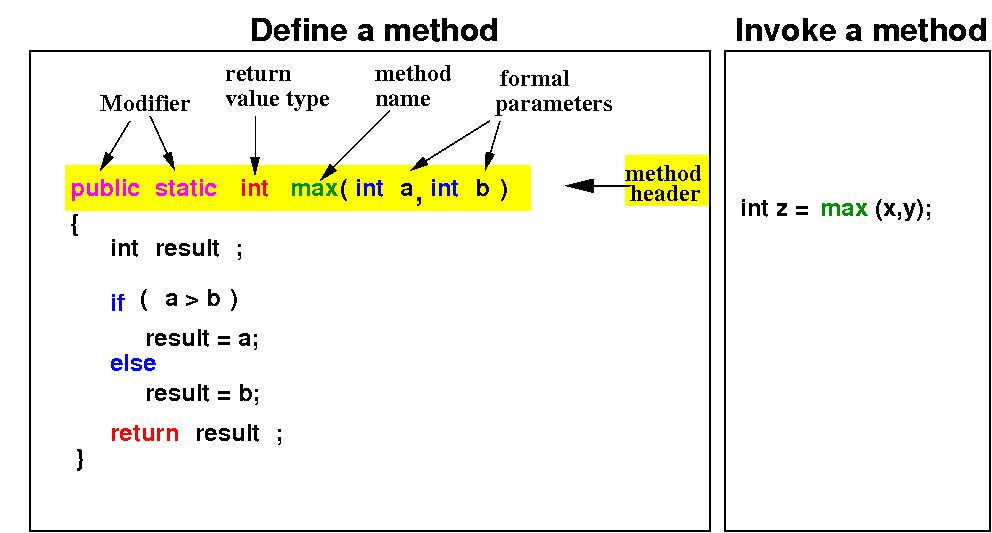
We will examine the different components in the method header next...
Defining
and invoking
a method
The public modifier declares that the method is accessible (= usable) by other classes:
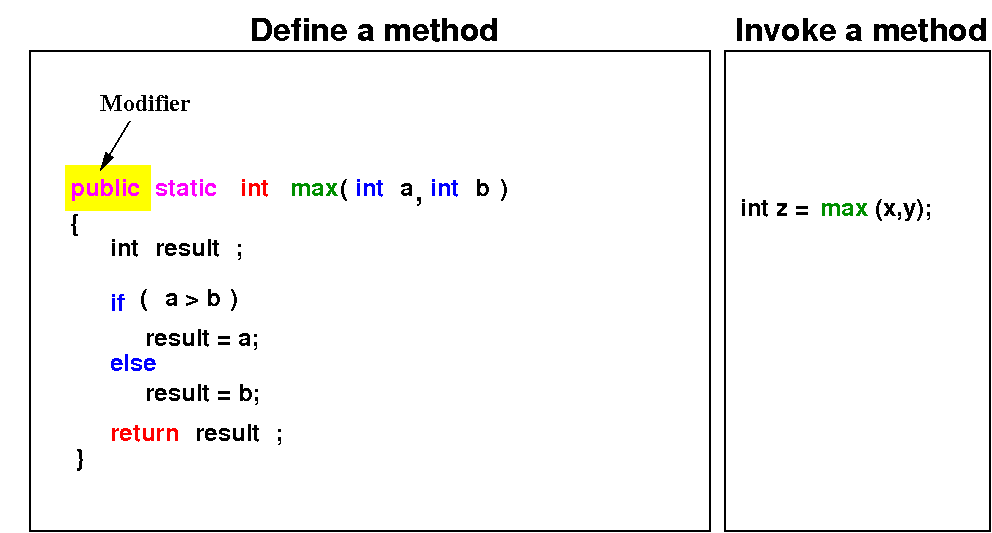
A class can also have private methods which we will study later
Defining
and invoking
a method
The static modifier declares that the method is general purposed and does not operate on an object:
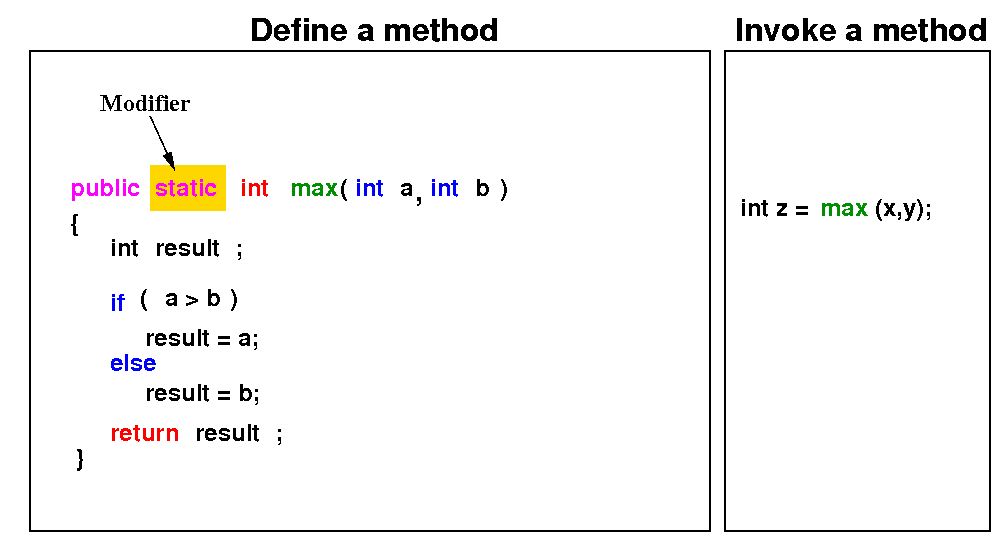
We will study static methods in this chapter (and instance methods in Chapter 8: classes and objects)
Defining
and invoking
a method
A method may return a value. The returnValueType specifies the data type of the value returned:
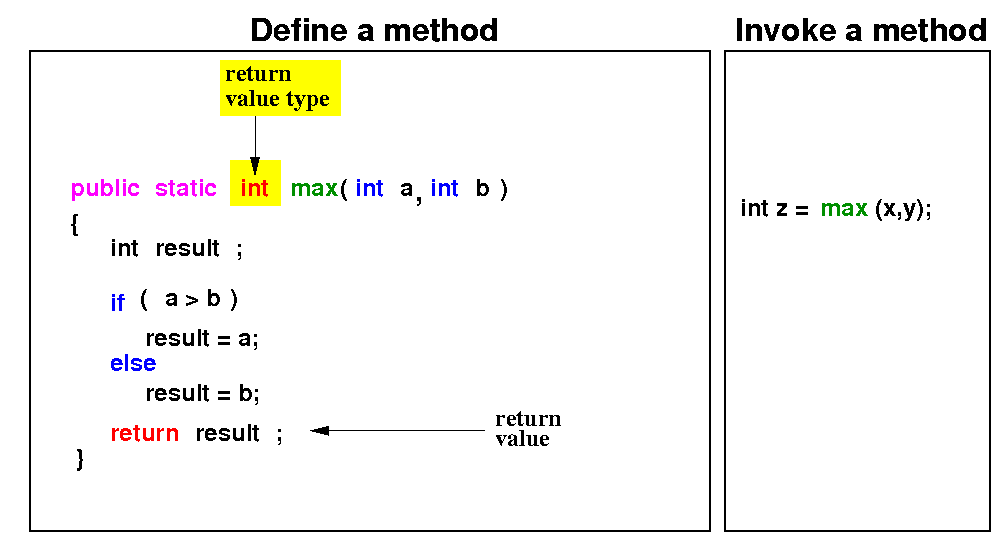
Some methods do not return any value. The return type of such method is: void (E.g.: void main( ))
Defining
and invoking
a method
The variables defined in the method header are known as formal parameters (or simply as parameters):
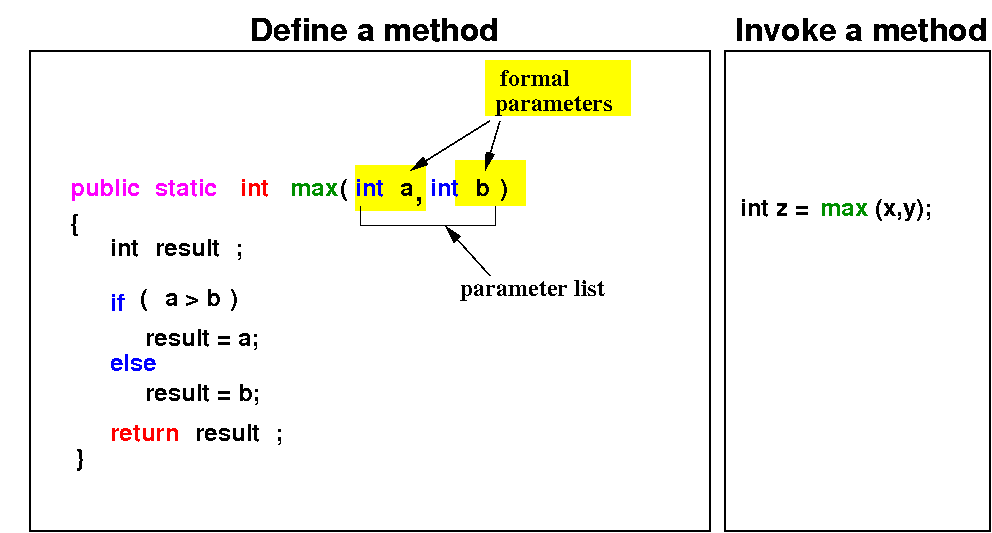
A parameter is a placeholder for an input value: you pass (= copy) a value to the parameter at invocation
Defining
and invoking
a method
The values passed to a method at invocation are called actual parameters (or: arguments):
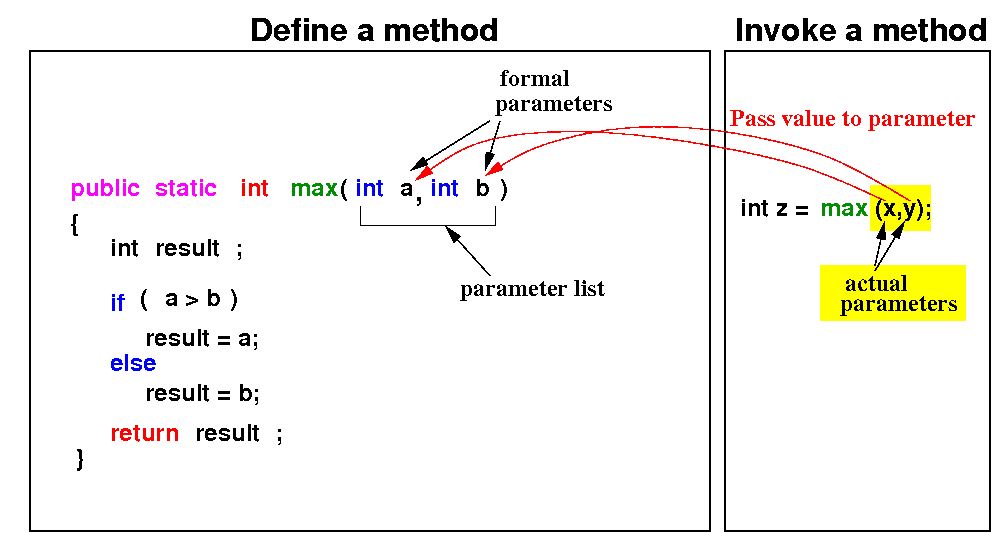
The assignment from actual parameters to formal parameters is by their position in the parameter lists.
Defining
and invoking
a method
The parameter list is determined by (1) ordering, (2) number and (3) data type of the parameters:
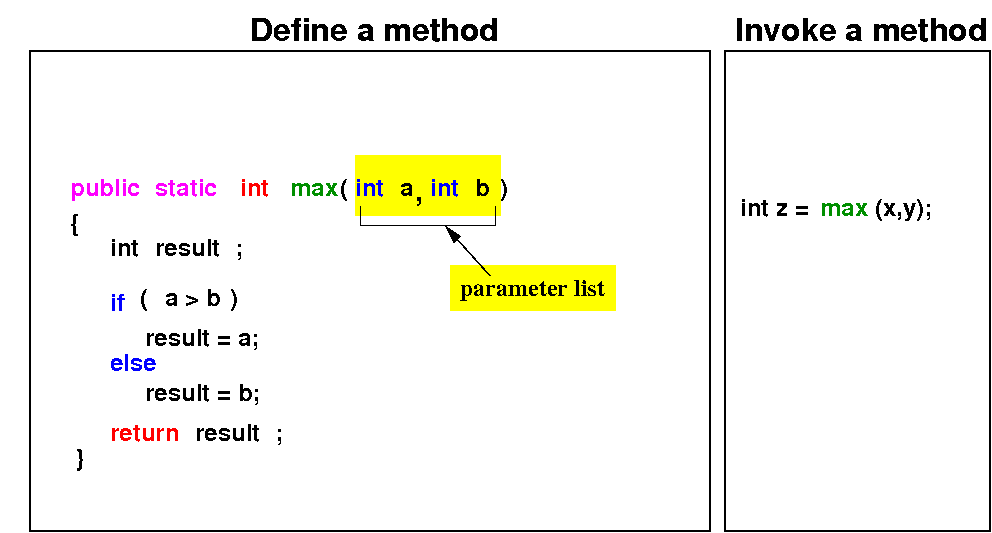
Two parameter lists are different if any one of the three properties is different
Defining
and invoking
a method
The method name and the parameter list together constitute (= make up) the method signature:
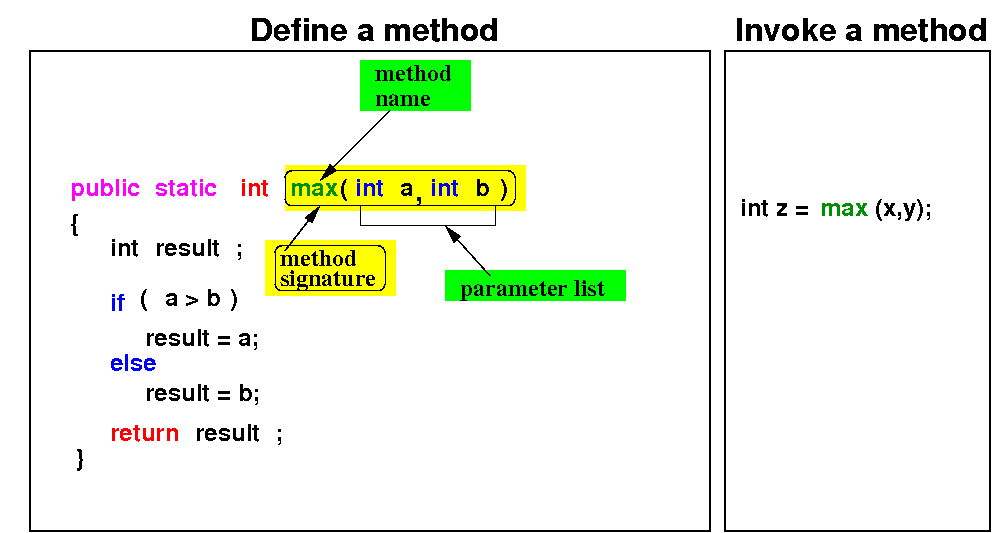
In every class, you cannot have more than one (> 1) method with the same method signature.
How a
method is
used
The method body contains a collection of statements that implement the method:
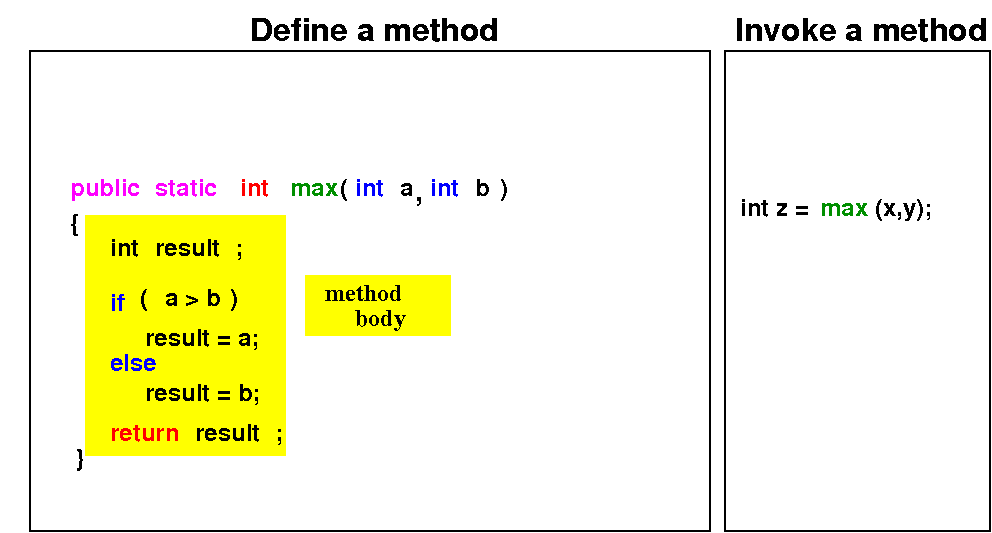
The statements in the method body are executed when a method is invoked (or called)
How a
method is
used
To execute a method, you use a method invocation/call statement:
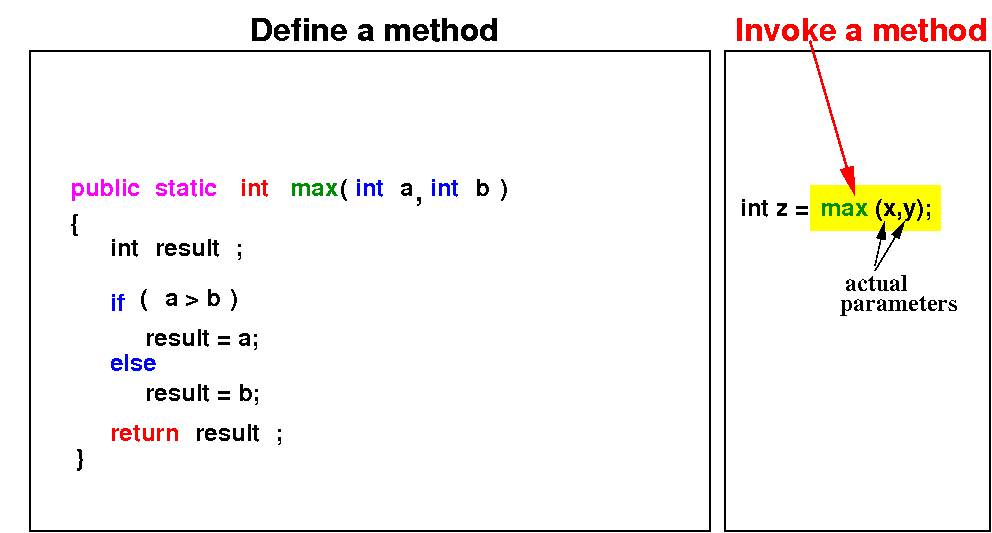
The program execution is then transfered to the method until the called method returns -- Demo in BlueJ
How a
method is
used
The return statement returns the return value to the method invocation statement:
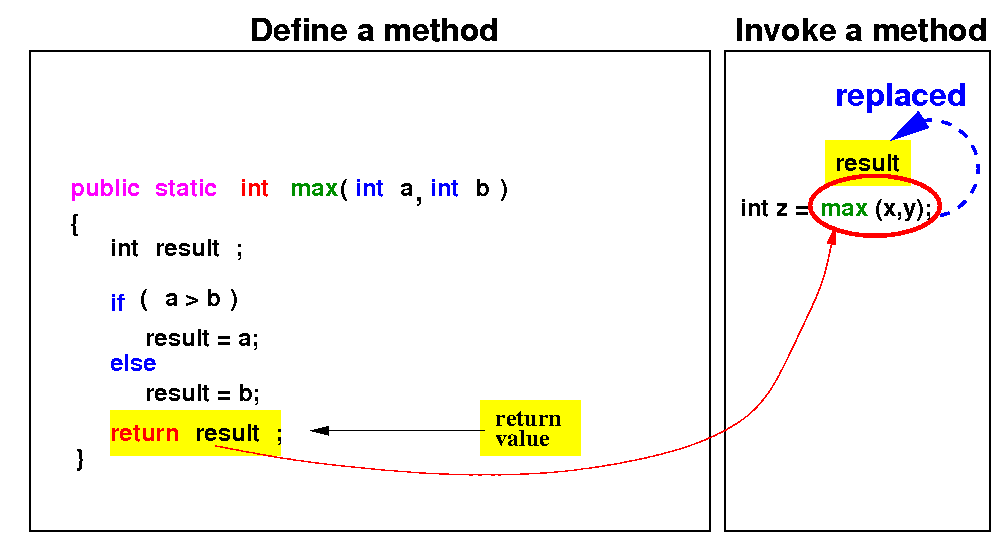
The return value will replace the invocation upon return and the return value is used in further calculation
Example of a
void
typed method
Methods that do not return a value are defined with returnValueType void:
    public static void main(String[] args)
    {
        int x = 3, y = 7;

        printMax(x,y);  // How to invoke a void typed method
    }

    public static void printMax(int a, int b)
    {
        if ( a > b )
            System.out.println(a);
        else
            System.out.println(b);

        return;   // Optional
    }
|
When the method executes a return statement, it will return to the caller
When execution reaches the end of the method, it will also return to the caller
DEMO: demo/06-methods/02-method/PrintMax.java