Filter

  • Filter = a a device that can reduce or enhance certain aspects of an (input) signal

    See: click here

  • AND gates and OR gates can work as an all or nothing filter

    We can use AND gates (or OR gates) to:

      1. Allow an input signal to pass the AND gate (or OR gate)

      2. Block an input signal from passing the AND gate (or OR gate)      

The AND gate as an all-or-nothing filter
 

Traditional view of the AND gate:
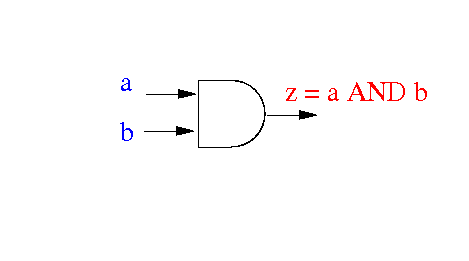
 

The AND gate as an all-or-nothing filter
 

Another way to view the operation of the AND gate:
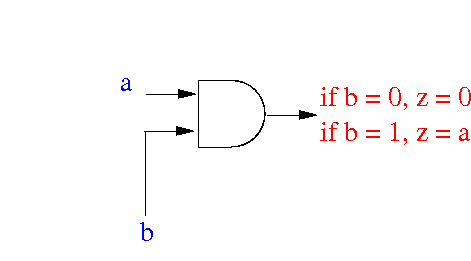
The signal b controls whether the input a is allowed to pass to the output

The AND gate as an all-or-nothing filter

How to use an AND gate as an all-or-nothing filter:
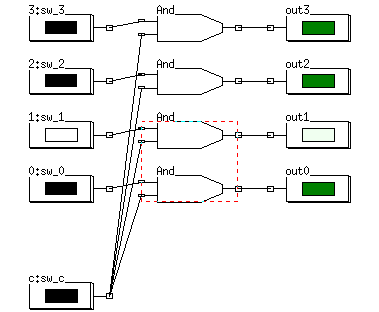
 
  • The top left column is the input (binary) number 1101
  • The lower left signal controls the filter function: 1 = pass

The AND gate as an all-or-nothing filter

How to use an AND gate as an all-or-nothing filter:
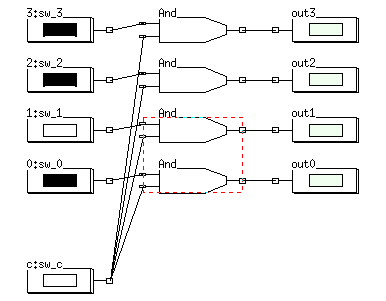
 
  • The top left column is the input (binary) number 1101
  • The lower left signal controls the filter function: 0 = block

The AND gate as an all-or-nothing filter

How to use an AND gate as an all-or-nothing filter:

 
  • DEMO: /home/cs355001/demo/circuits/and-filter  

The collating function of OR gates
 

Another use of the OR gate is to:

  • collate multiple signals into one single signal where -- under a specific operating condition -- the output signal is equal to the active input signal

  • Operating condition for the collate function:

      • All input signals except one must be equal to 0   

    Then the output signal will be equal to the one active input signal

Example to illustrate the collating function of OR gates

Suppose inputs 1, 2, 3, 4 are all 0 and input 0 is actively changing:
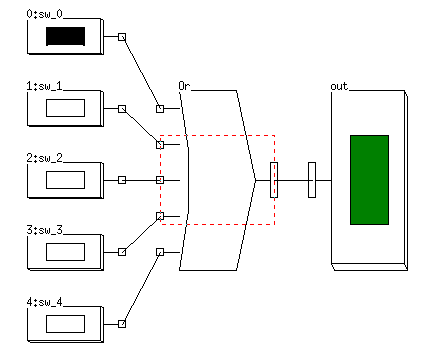
The output signal will be equal to the input signal 0

Example to illustrate the collating function of OR gates

Suppose inputs 0, 1, 3, 4 are all 0 and input 2 is actively changing:
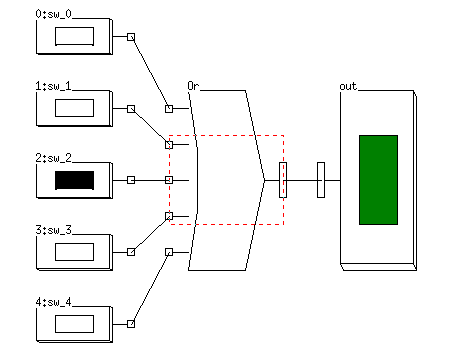
The output signal will be equal to the input signal 2
DEMO: /home/cs355001/demo/circuits/or-collate