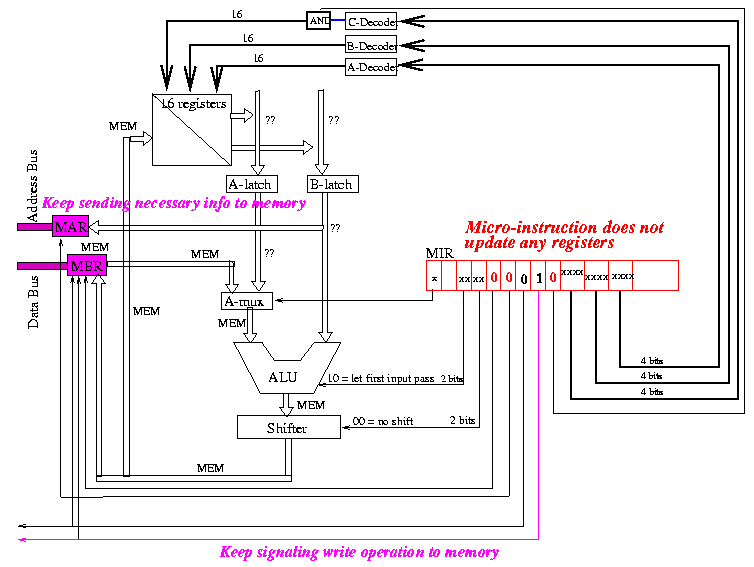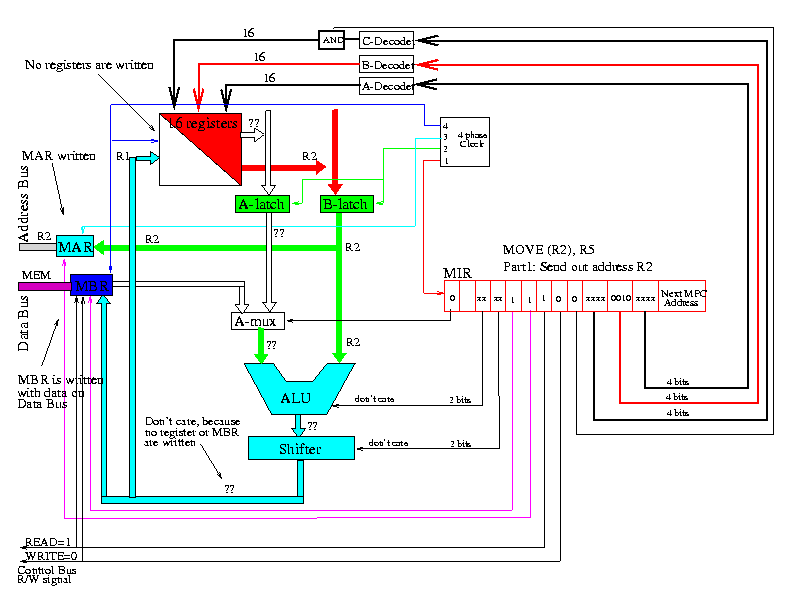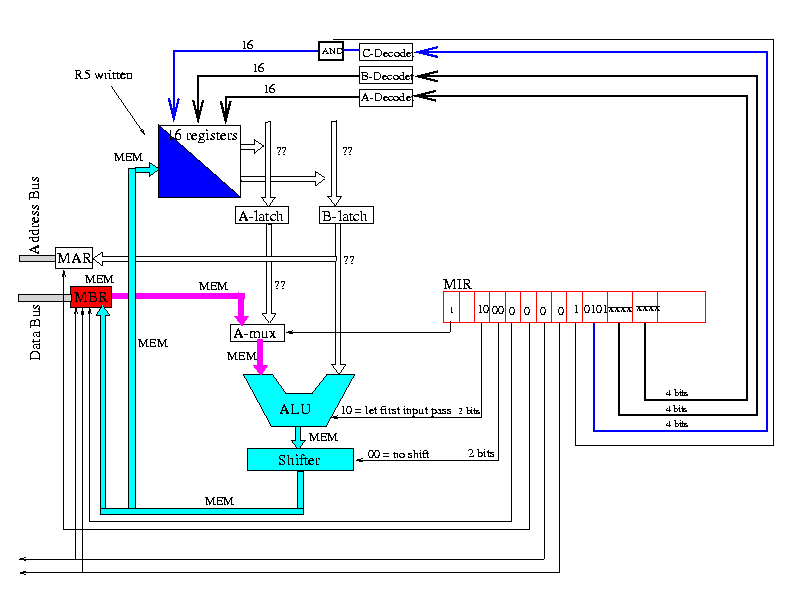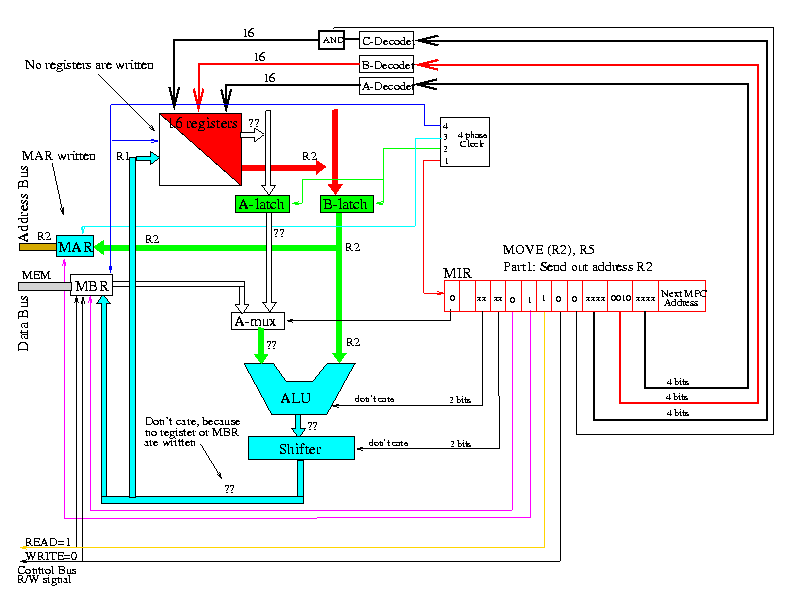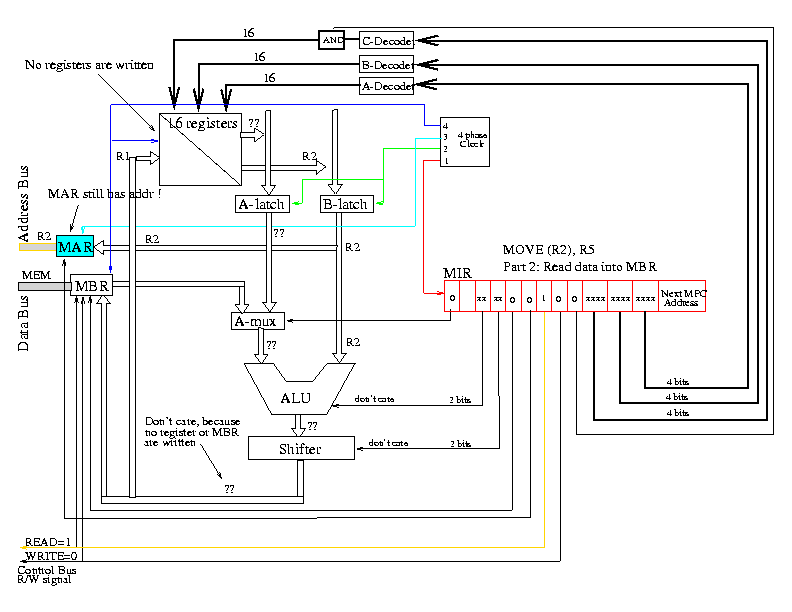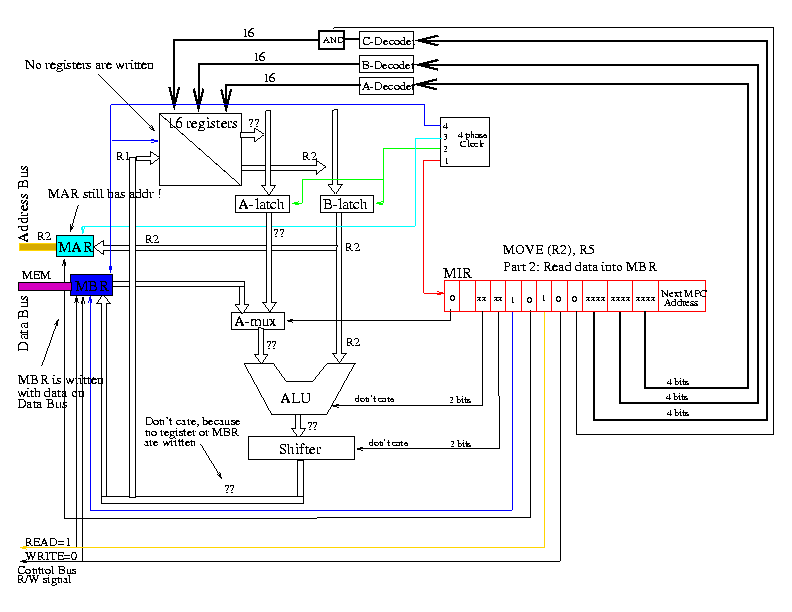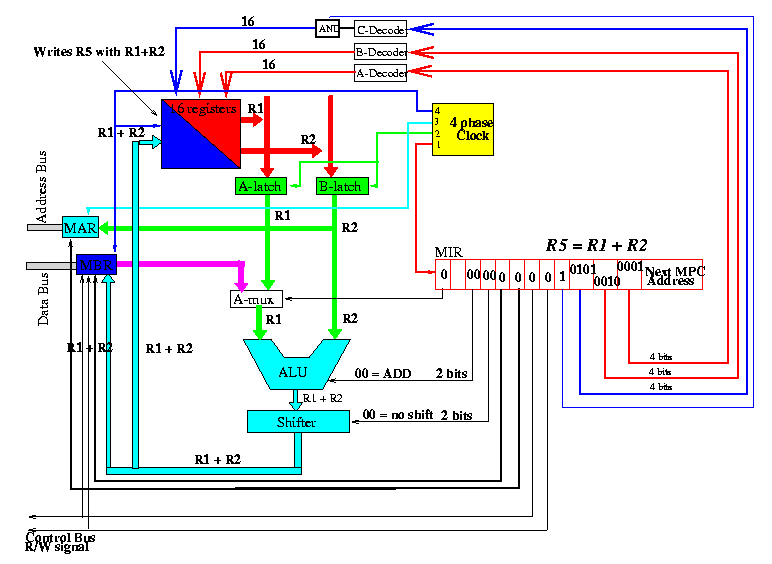
You have to study the bits in the MIR very carefully. Each bit controls some part of the datapath.
Remember also that different parts of the CPU are activated (instructed to update itself) at different times - in the order given by the 4-phase clock. So looking in the above figure, and following the signals of the 4-phase clock, you will see the following happening (I have colored the different parts that are updated with 4 different colors to make things easier to follow):
- Phase 1:
The "next" micro instruction is loaded into the MIR and the MIR
sends out control signals immediately.
The control signals that is important in phase 1 are the A and B fields, which select the registers 0001 (R1) and 0010 (R2)
BTW: the reason why these signals are important in phase 1 is because the A- and B-latches are updated in the next phase and the input input the A- and B-latches are selected by the A and B fields.
- Phase 2:
A- and B-latches are updated and captures the values of
R1 and R2 and keep these values for the remainder of the CPU cycle.
- Phase 3:
phase 3 has 2 different uses in different micro-instructions.
The first use is to allow the ALU and Shifter time to do
the computation - which is happening in this example.
The second use of phase 3 is to update the MAR, this does not happen in this micro-instruction. We will see one such instruction below.
- Phase 4:
in phase 4, the result is written to the destination.
The destination can be a register or the MBR (in the case of
a memory write instruction).
In this example, register R5 (0101 indicates register 5) will
be updated because ENC bit = 1.
On the other hand, the MBR is not updated because
the MBR bit in the MIR is equal to 0.
- In summary: R1 and R2 are first copied into A- and B-latches, the ALU is instructed to add, the shifter does no shift, the result on the C-bus is thus R1 + R2, and this result is written into register R5.
NOTE: you can use cs355-demo-dp2 to see this instruction in life action. Select instruction 3.