- Fetch the proper operands into the A-latch/MBR and B-latch
- Give the ALU some time to operate on the operands in A-latch/MBR and B-latch
- Write the result into a register or into MBR (for further transfer to memory)
If this order is not followed, then the wrong result will be written to the final destination.
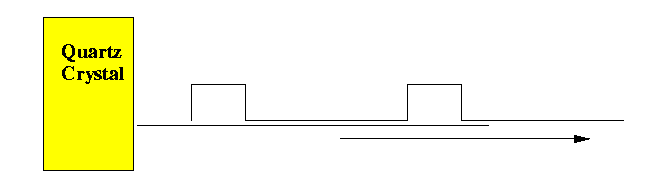
Recall that a clock in the computer is a device that generate a train (serie) of pulses:

The main purpose of the clock is to pace various devices inside the computer. By "pacing", I mean: to make sure things happen in a certain order.
- Get the next micro instruction to execute. After getting the micro instruction, the next 3 phases will actually execute the command encoded by micro instruction...
- Get the operands into A- and B-latches
- Give ALU and shifter time to compute
- Write the result to MBR or a register
A 4-phase clock will have 4 different outputs and the waves outputted on each output looks like as follows:
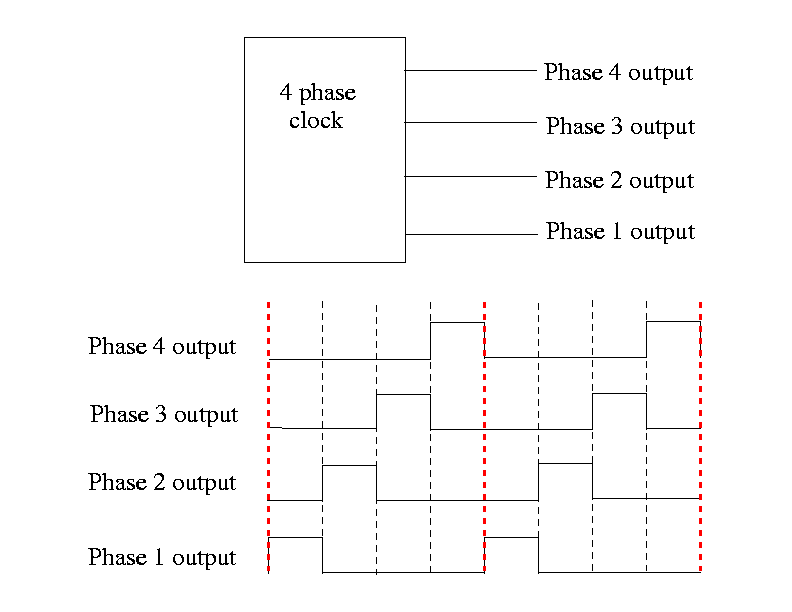
Just imaging what would happen if you would the output signals of the 4-phase clock to trigger different D-flipflops that are found on the datapath.
As you know, when a D-flipflop is triggered by a clock signal, only then it will update its output to be equal to its input.
We can pace the executing of the datapath by connecting:
- Those parts of the datapath that need to be updated first to the phase 1 output of the 4-phase clock (so that these parts will do their work first).
- Those parts of the datapath that need to be updated next to the phase 2 output of the 4-phase clock (so that these parts will do their work next).
- And so on.
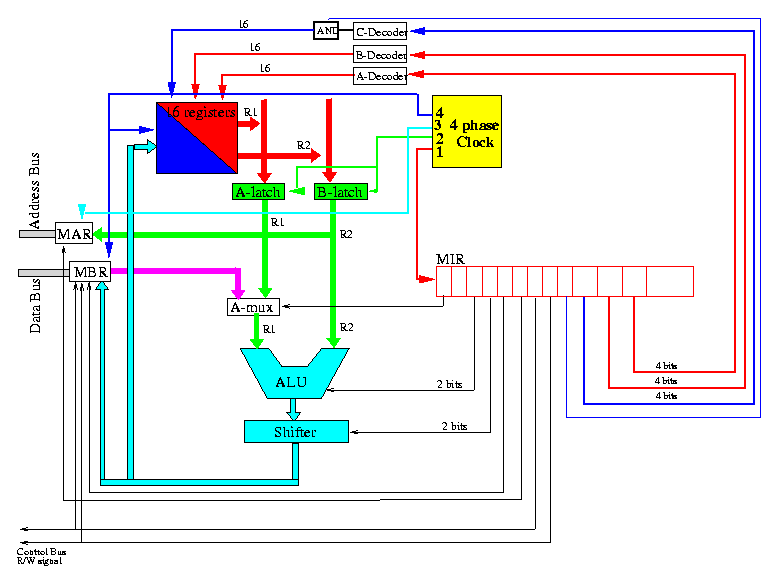
- MIR must be loaded with a new micro instruction first,
so the MIR register will be connected to phase 1.
- Operands must be fetched into the A- and B-latches next, so the
A- and B-latches are connected to phase 2.
- After the A- and B-latches have been updated, we can
(things can branch off):
- Update MAR with the B-latch output
- and/or let ALU & shifter do the computation (they don't need a clock signal...)
So we can connect the MAR write signal to phase 3.
- When the ALU/shifter finishes, we can update the MBR or a register with the shifter output, so we can connect the MBR and the registers to phase 4.
We therefore get the following connections:
- Suppose the
next micro-instruction
that is offerred to the
CPU is as follows:
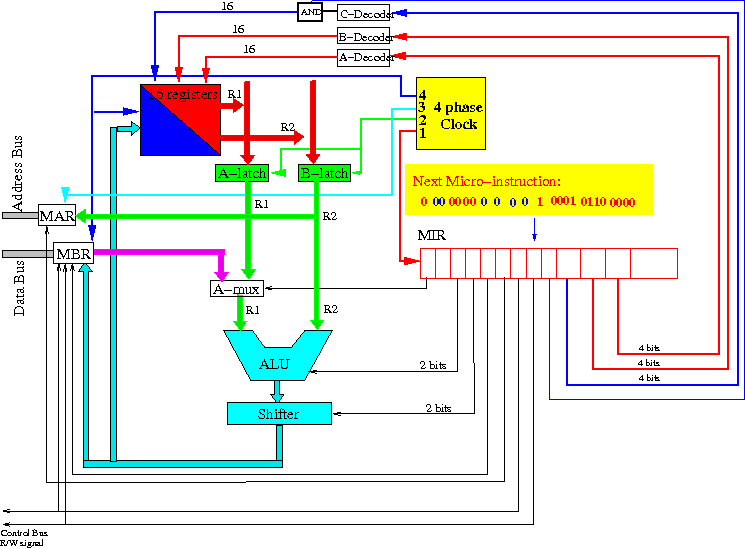
(Recall: this is the instruction R1 = R0 + R6)
- Let us follow the
4 phase clock and
see which
memory elements will be
updated during
each phase of
the clock:
- During phase 1
(only the components
connected to
phase 1 of the
clock will
receive a
activation signal):
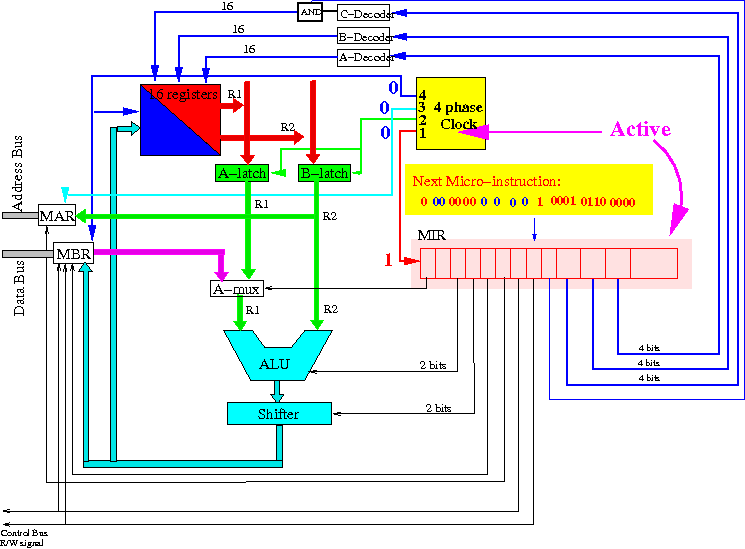
Result:
- The Micro-Instruction Register is
updated with the
next micro-instruction:
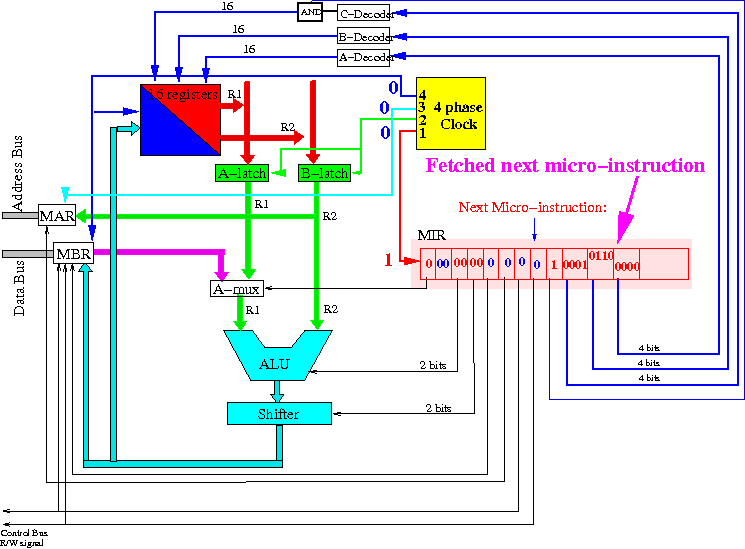
(This is the micro-instruction that will be executed during phase 2, 3, 4 of the 4-phased clock !!!)
- The Micro-Instruction Register is
updated with the
next micro-instruction:
- During phase 2
(only the components
connected to
phase 2 of the
clock will
receive a
activation signal):
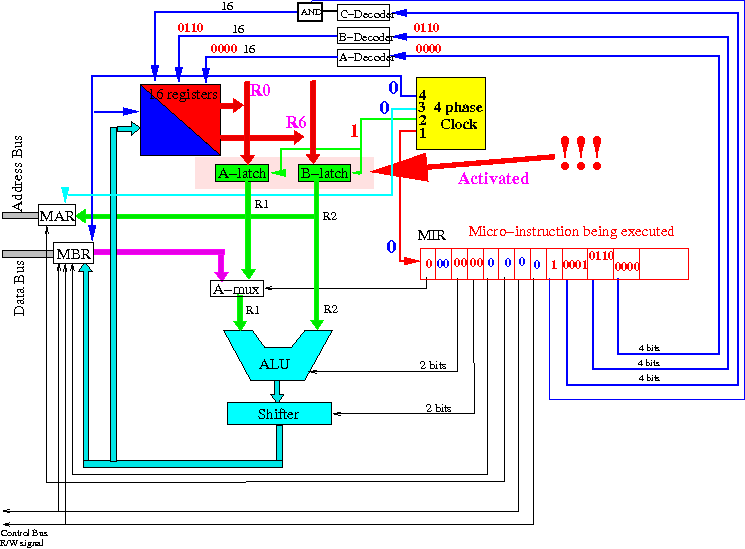
Result:
- The A/B latches are
updated with the values in the
registers
selected by
0000 (R0) and
0110 (R6):
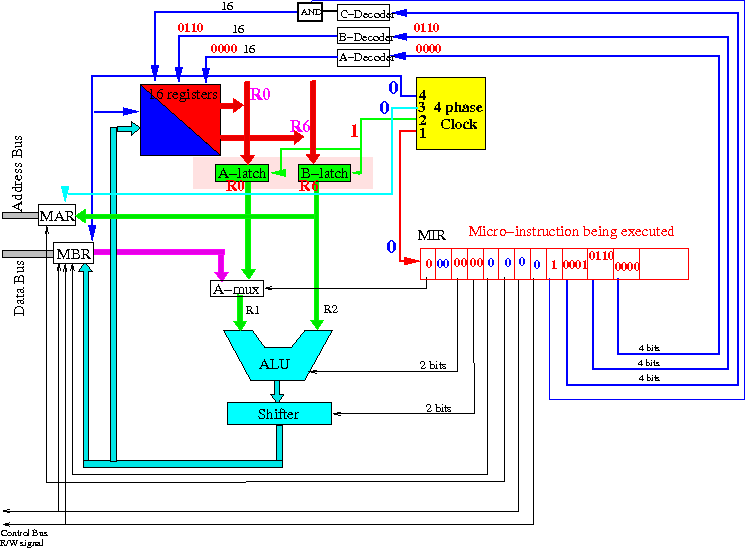
(Recall: This micro-instruction is R1 = R0 + R6, the CPU has just fetched the input operands R0 and R6 !!!)
- The A/B latches are
updated with the values in the
registers
selected by
0000 (R0) and
0110 (R6):
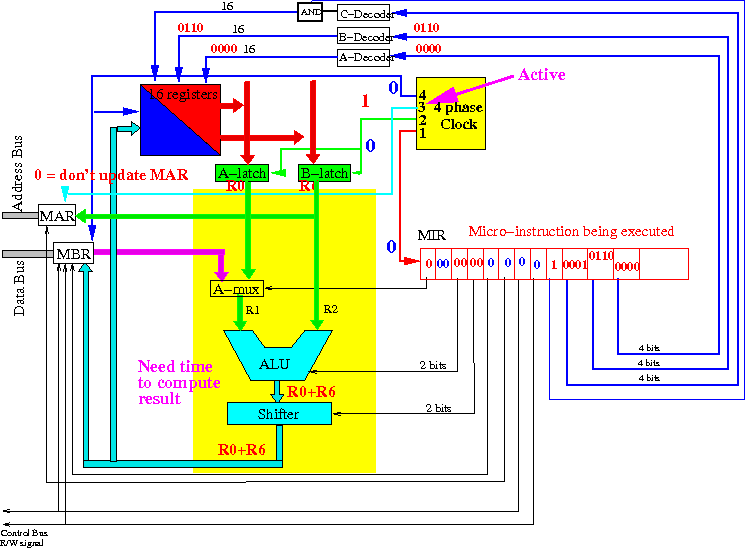
- During phase 3
(only the components
connected to
phase 3 of the
clock will
receive a
activation signal):
Result:
- No memory elements are being
updated during
phase 3.
The purpose of Phase 3 is provide time to allow the computation to be performed
(Electricity takes some time to flow through the ALU, because it has many gate delays !!!)
The computation (R0+R6) will now arrive at the inputs of the registers:
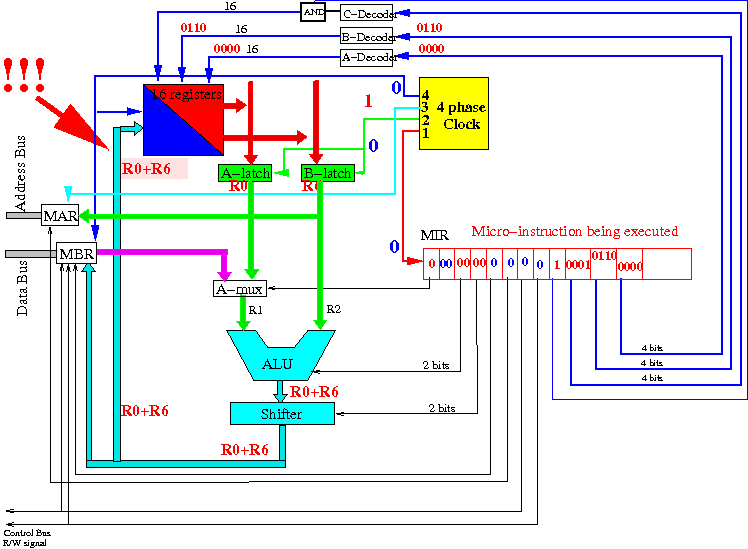
(Recall: a register will not update its value until it receives a clock (write) signal)
- No memory elements are being
updated during
phase 3.
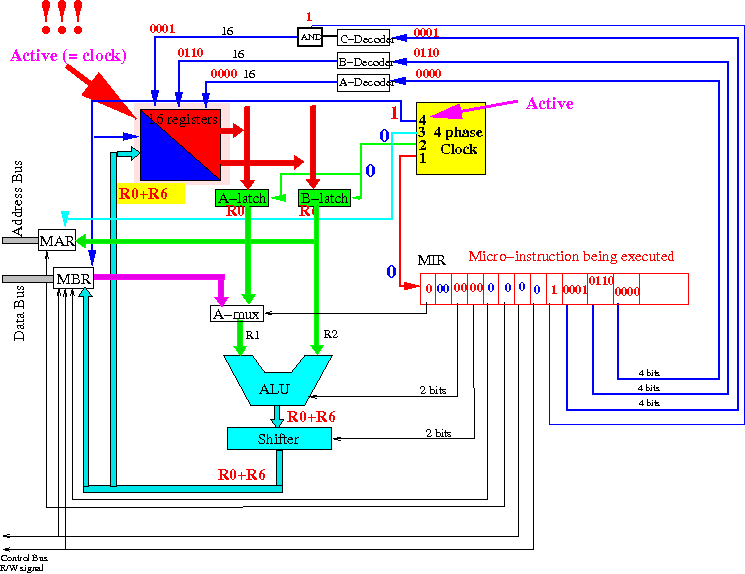
- During phase 4
(only the components
connected to
phase 4 of the
clock will
receive a
activation signal):
Result:
- One of the register
(the one selected by
the C value (0001) will
receive a
clock signal
This is the register R1
Therefore:
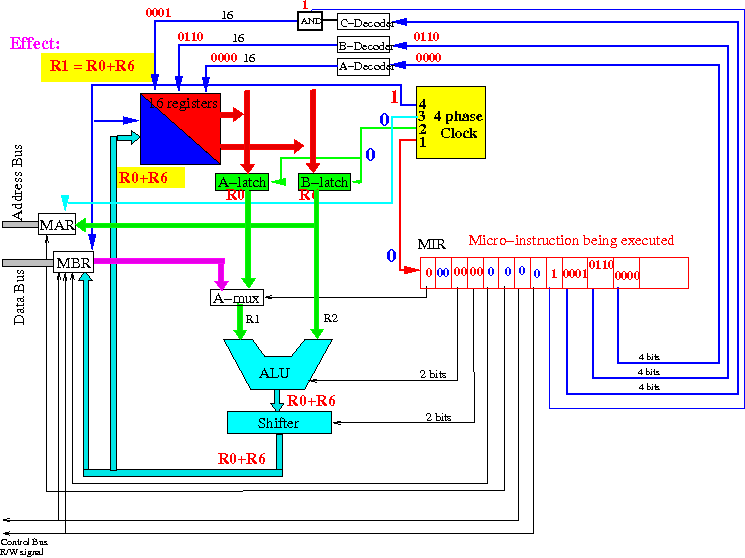
The register R1 will be updated with the value R0+R6 !!!
- One of the register
(the one selected by
the C value (0001) will
receive a
clock signal
- After phase 4,
we will be back to
phase 1:
- We will fetch another (different one !!!) micro-instruction into the micro-instruction register and execute it during phase 2, 3 and 4.
And so on, and so on....
- During phase 1
(only the components
connected to
phase 1 of the
clock will
receive a
activation signal):
/home/cs355001/demo/datapath/cs355-demo-dp2 |
How to operate:
- Switch off Reset
first (press key ' (next to the ENTER key)
once)
- Use switches in the top-right hand corner
to setup the
instruction that
you want to execute
- After setting up
a micro instruction do:
- Toggle the key '/' 4 times up and down --- this will make the 4-phased clock go 1 complete cycle
- Observe carefully the order of execution:
- (Phase 0) Set up the micro instruction
- (Phase 1) Load operands into A- & B-latches
- (Phase 2) Performs operation
- (phase 3) Write back result.
It's like "clock work"...
A crystal generates a clock-wave that is split off into 4 output.
By placing "delays" between the cystal signal and the output,
we can shift the wave in time.
The "delays" are nothing more than a long piece of copper wire so that
the electricity must travel a longer distance to different outputs:
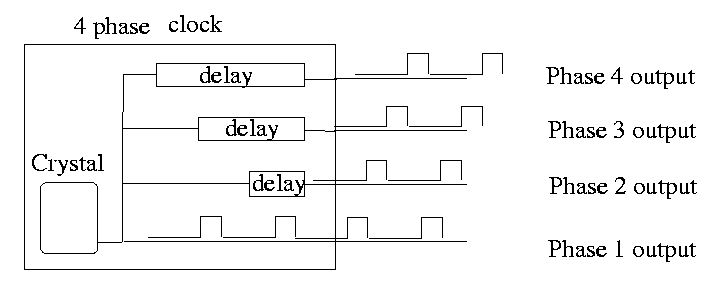
The crystal element generates the following clock wave form: