- Rollback:
- Rollback = undo all the updates performed by a transaction
- Important fact:
- If a
transaction T1
writes
a DB element A
(and transaction T1
has not committed)
and
later the
transaction T2
reads the
value
written by
transaction T1,
then:

The validity of the value read by transaction T2 will depend on whether transaction T1 will commit
- If a
transaction T1
writes
a DB element A
(and transaction T1
has not committed)
and
later the
transaction T2
reads the
value
written by
transaction T1,
then:
- Cascading rollback:
- If
transaction T1
has read (used)
dirty data
written by
the
uncommitted transaction
T2,
then:
- When
transaction T1
aborts, then:
- We must also abort transaction T2 !!!
- When
transaction T1
aborts, then:
- If
transaction T1
has read (used)
dirty data
written by
the
uncommitted transaction
T2,
then:
- Cascading rollback procedure:
   T = the transaction that has aborted


   RollBack( T )
   {
      Undo the updates performed by transaction T;
                // This depends on the logging method
		// See below...

      Let S = set of transactions that has read (dirty) data from T

      for ( each Ti ∈ S ) do
      {
         Abort( Ti );

	 RollBack( Ti );  // This will abort and rollback
                          // ALL transactions that have read
			  // from T indirectly
      }
   }
- Fact:
- The rollback procedure is different for different logging methods !!!
- Rollback
an update
when using an undo log:
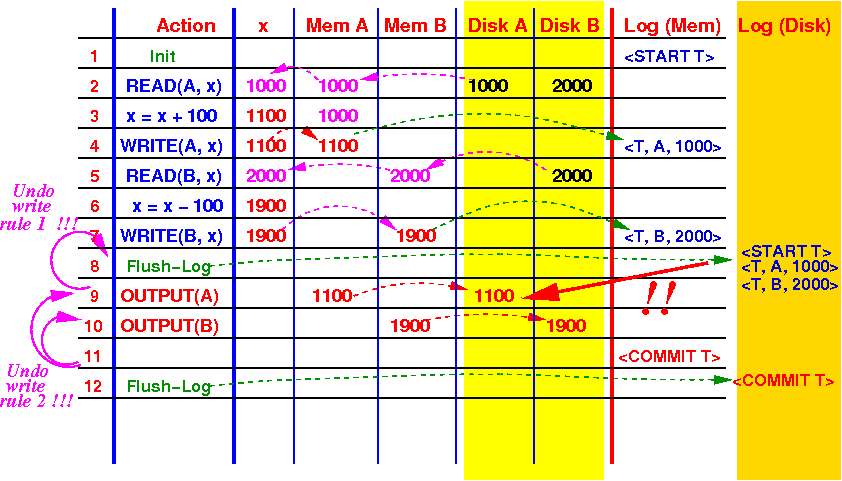
- In undo logging, we
write a
undo log record when
we update the
database element:
- The dirty data can be
found in these
places:
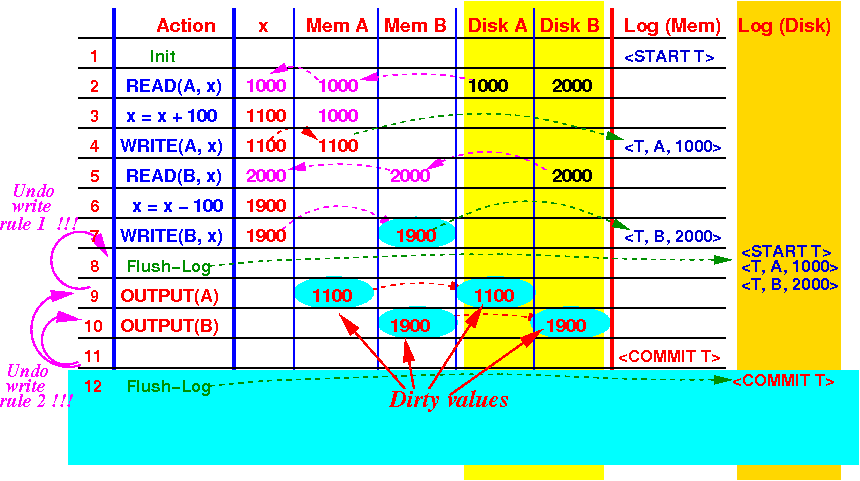
Dirty data can be stored:
- In memory buffer
- On disk

- Rollback procedure:
- Find all the
updated values by an
aborted transaction T
in the undo log

- Use the
(old) value in the
undo log
to:
- Restore the value of the database element on disk and in the memory buffer
- Find all the
updated values by an
aborted transaction T
in the undo log
- In undo logging, we
write a
undo log record when
we update the
database element:
- Rollback
an update
when using a redo log:
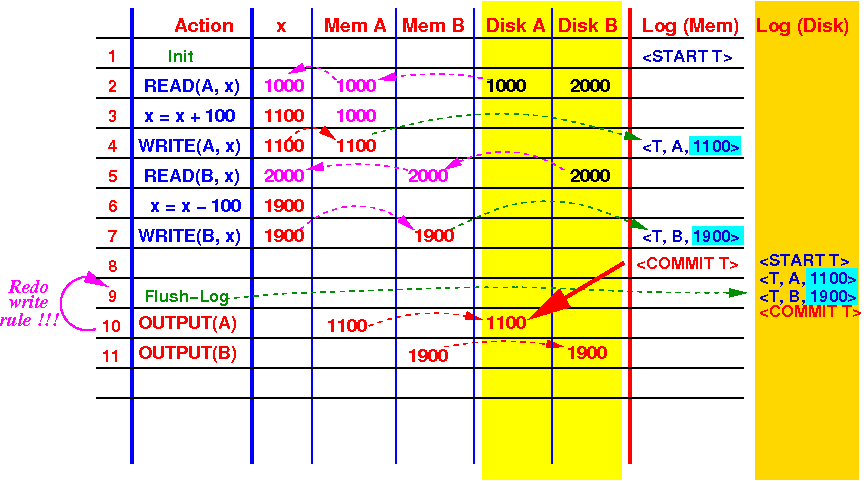
- In redo logging, we
will
only perform an
OUTPUT operation
(and
update the
database element on
disk)
when the
transaction
has
committed:
- The dirty data can be
found in these
places:
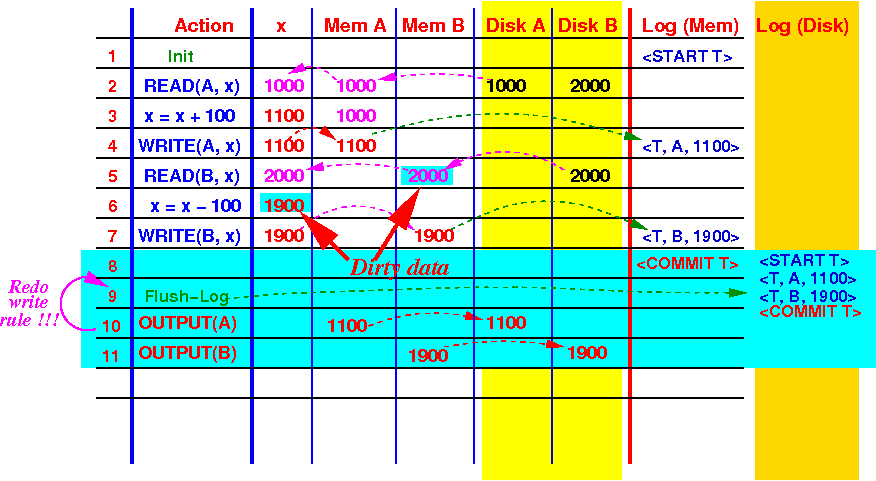
Dirty data can be stored:
- In memory buffer

- Rollback procedure:
- Find all the
updated values by an
aborted transaction T
in the redo log

- Use the
value in the
database element
stored on disk to:
- Restore the value of the database element in the memory buffer
- Find all the
updated values by an
aborted transaction T
in the redo log
- In redo logging, we
will
only perform an
OUTPUT operation
(and
update the
database element on
disk)
when the
transaction
has
committed:
- Rollback
an update
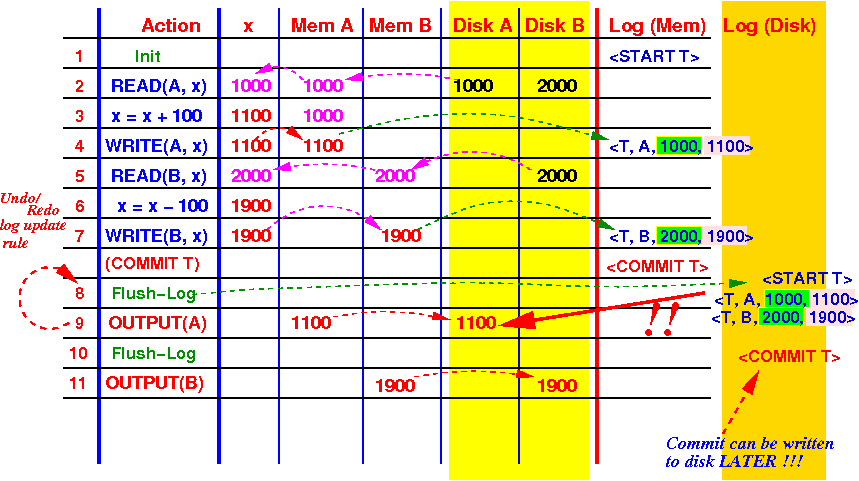
when using an undo/redo log:
- In undo/redo logging, we
write a
undo log record when
we update the
database element:
- The dirty data can be
found in these
places:
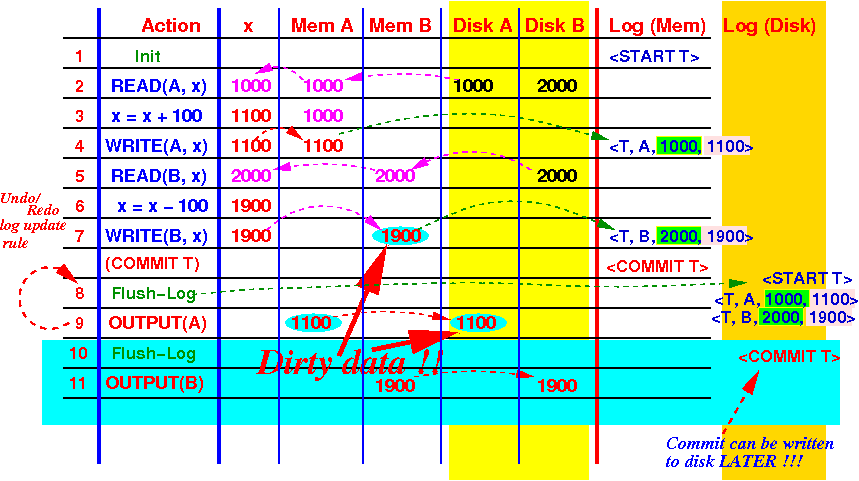
Dirty data can be stored:
- In memory buffer
- On disk

- Rollback procedure:
- Find all the
updated values by an
aborted transaction T
in the undo/redo log

- Use the
(old) value in the
undo/redo log
to:
- Restore the value of the database element on disk and in the memory buffer
- Find all the
updated values by an
aborted transaction T
in the undo/redo log
- In undo/redo logging, we
write a
undo log record when
we update the
database element: