- We have seen - so far - how the CPU fetches the "next" assembler
instruction from the memory at the address given by the PC register.
The next phase in the instruction execution cycle is to decode
the assembler instruction.
Decoding means: find out what the assembler instruction means
- Before we can talk about decoding an assembler instruction,
we need to know how each instruction is
encoded...
- The assembler encoding is designed
by each CPU manufacturer to their own liking...
Various motivations of differing importance will dictate
the design, such as: fixed vs. variable length, how many
registers does the CPU have, what can each register do, etc.
We will use a very simple-minded assembler code to illutsrate the
CPU.
Also, a simple assembler code will simplify the decoding
process.
- The assembler code that our tou CPU will execute will be:
- Fixed length
- have very limited addressing modes
- The following is the assembler instruction encoding that we will use:
| Instruction code | Mnemonic | Instruction |
Meaning |
| 0000xxxxxxxxxxxx | LODD | Load Direct | ac <- mem[x]
|
| 0001xxxxxxxxxxxx | STOD | Store Direct | mem[x] <- mem[x]
|
| 0010xxxxxxxxxxxx | ADDD | Add Direct | ac <- ac + mem[x]
|
| 0011xxxxxxxxxxxx | SUBD | Subtract Direct | ac <- ac - mem[x]
|
| 0100xxxxxxxxxxxx | JPOS | Jump positive |
if ac > 0 then pc <- x
|
| 0101xxxxxxxxxxxx | JZER | Jump zero |
if ac = 0 then pc <- x
|
| 0110xxxxxxxxxxxx | JUMP | Jump always | pc <- x
|
| 0111xxxxxxxxxxxx | LODC | Load constant | ac <- x
|
| 1000xxxxxxxxxxxx | LODL | Load local | ac <- mem[sp + x]
|
| 1001xxxxxxxxxxxx | STOL | Store local | mem[sp + x] <- ac
|
| 1010xxxxxxxxxxxx | ADDL | Add local | ac = ac + mem[sp + x]
|
| 1011xxxxxxxxxxxx | SUBL | Subtract local | ac = ac - mem[sp + x]
|
| 1100xxxxxxxxxxxx | JNEG | Jump negative |
if ac < 0 then pc <- x
|
| 1101xxxxxxxxxxxx | JNZE | Jump nonzero |
if ac != 0 then pc <- x
|
| 1110xxxxxxxxxxxx | CALL | Call subroutine |
sp <- sp-1; mem[sp] <- pc; pc <- x
|
| 1111000000000000 | PUSHI | Push Indirect |
sp <- sp-1; mem[sp] <- mem[ac]
|
| 1111000100000000 | POPI | Pop Indirect |
mem[ac] <- mem[sp]; sp <- sp+1;
|
| 1111001000000000 | PUSH | Push on stack |
sp <- sp-1; mem[sp] <- ac
|
| 1111010000000000 | POP | Pop off stack |
ac <- mem[sp]; sp <- sp+1;
|
| 1111100000000000 | RET | Return from subroutine |
pc <- mem[sp]; sp <- sp+1;
|
| 1111101000000000 | SWAP | Swap ac and sp |
tmp <- ac; ac <- sp; sp <- tmp
|
| 11111100yyyyyyyy | INCSP | Increment sp | sp <- sp + y
|
| 11111110yyyyyyyy | DECSP | Decrement sp | sp <- sp - y
|
- The goal of the decoding process is to
map each each assembler instruction to a sequence of
micro-instructions that performs the indicated operation.
Example 1:
  If assembler instruction read in is:     0000000000001111

  According to the encoding in the table above, this assembler
  instruction means:

	Load (the first bits are 0000 which means "load")
	the data from memory address 000000001111
	into the AC (accumulator) register

  We have seen how the CPU can instruct the datapath to load
  data from memory using the following micro-instructions
  (click here):

    1. mar = 0000000000001111; rd;  // Send out addr and read request
    2. rd;                          // Use 0 of more of this instr to wait
    3. rd; mbr;			    // When data is read on databus, read into MBR
    4. ac := mbr;		    // Transfer data from MBR to destination
The webpage at (click here)
contains picture that shows the dataflow in these instruction.
Example 2:
  If assembler instruction read in is:     0001000000001111

  According to the encoding in the table above, this assembler
  instruction means:

	Write (the first bits are 0001 which means "Store")
	the data from the AC register to memory address
	000000001111

  We have also seen how the CPU can instruct the datapath to write
  data from memory using the following micro-instructions
  (click here):

    1. mar = 0000000000001111; mbr = ac; wr;
	      // Send out addr in MAR, the data in MBR and a write request.
    2. wr;    // Use 0 of more of this instr to wait for the memory
	      // to finish
The webpage at (click here)
contains picture that shows the dataflow in these instruction.
- As you see from the examples above, the instruction decode
phase depends on the assembler instruction encoding and
for our encoding, the decode procedure
can be captured into the following high level program:
START:

  // Fetch next assembler instruction from memory at address "PC"
  // (has been discussed)

  // Now we decode the assembler instruction:

  if ( left most bit in assembler code == 0 )
  {  // This program segment decodes assembler instructions 0???.....

     if ( 2nd left most bit in assembler code == 0 )
      {  // This program segment decodes 00??.....

         if ( 3rd left most bit in assembler code == 0 )
         { // This program segment decodes 000?.....

            if ( 4th left most bit in assembler code == 0 )
            { // Jackpot: 0000xxxxxxxxxxxx is a load operation

               mar = addr "xxxxxxxxxxxx" in assemler instruction; rd;
			              // Send out addr and read request
               rd; mbr;	              // Read databus into MBR
               ac := mbr; goto START; // Transfer data from MBR to destination
	      			      // and loop back (fetch next assm instr)
            }
            else
            { // Jackpot: 0001xxxxxxxxxxxx is a store operation

               mar = addr "xxxxxxxxxxxx"; mbr = ac; wr;
			        // Send out addr in MAR, the data in MBR
			        // and a write request.
               wr; goto START;  // Wait for memory to finish and then
	       			// loop back (fetch next assm instr)
	 }
         else
         { // This program segment decodes 001?.....
	   ...
	 }
      }
     else
      {  // This program segment decodes 01??.....
	 ...
      }
  }
  else
  {  // This program segment decodes assembler instructions 1???.....
     ...
     ... (similar construction as above)
  }
- Maybe you can/have already detected this program structure in
the micro-program:
ADDR   Micro Assembler Instruction                      Comment
===========================================================================
 0:    mar := pc; rd;
 1:    pc := pc + 1; rd; mbr;                 // Fetch assembler instruction

 2:    ir := mbr; if n then goto 31;              // Test left most bit
 3:    tir := lshift(ir + ir); if n then goto 22; // Test 2nd left most bit
 4:    tir := lshift(tir); if n then goto 13;     // Test 3rd left most bit
 5:    alu := tir; if n then goto 9;              // Test 4th left most bit

 6:    mar := ir; rd;         	 // Micro-program instructions that read
 7:    rd; mbr;			 // data at address given in the assembler instr
 8:    ac := mbr; goto 0;	 // into AC register (and loop back to START)

 9:    ir := ir and r8;          // Micro-program instructions that write
10:    mar := ir; mbr := ac; wr; // data from AC register to memory at address
11:    wr; goto 0;		 // given in the assembler instr & loop back

12:    alu := tir; if n then goto 17;                   {0010 or 0011?}
 ....
- Let me illustrate the decoding process with 2 concrete examples...
- Suppose the instruction fetch phase of the CPU
fetched the assembler instruction code "0000000000001111"
from memory.
As you have seen, this is the code for the assembler instruction
move the word at memory location 15 to the AC register
Note: if you were to program in assembler, you may have
written something like "move 15, AC" and the assembler
will translate this "text" representation into
the assembler code 0000000000001111
So after the micro-program instructions
     0:    mar := pc; rd;
     1:    pc := pc + 1; rd; mbr;
The MBR contains 0000000000001111.
- The next instruction in the micro-program is:
2: ir := mbr; if n then goto 31;
This micro-instruction forms the following if-construct:
  if ( left most bit in assembler code == 0 )
  { // Address 3: program segment decodes assembler instructions 0???.....
  }
  else
  { // Address 31: program segment decodes assembler instructions 1???.....
  }
Pictorially:
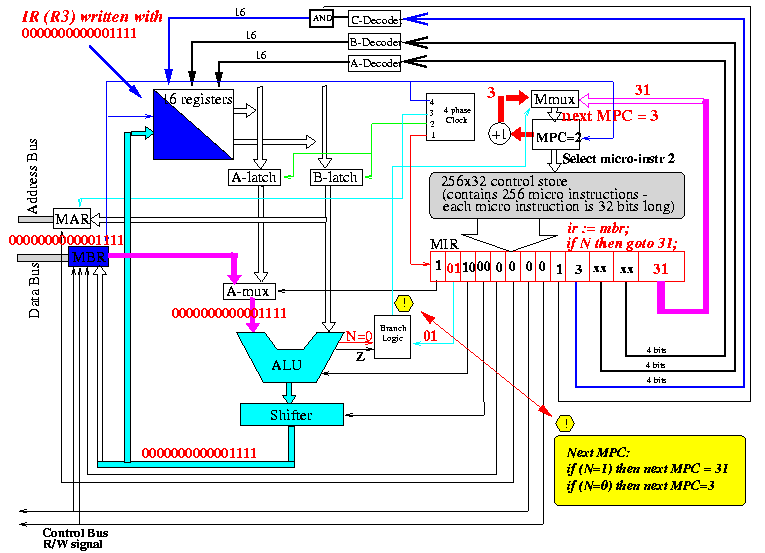
- The assembler instruction 0000000000001111 is copied into the IR register
- The CPU tests and finds the left most bit of the assembler instruction
is equal to 0 and will not branch.
- Since the first bit of the assembler instruction is 0
and the next MPC value is 3.
- The next instruction in the micro-program is:
3: tir := lshift(ir + ir); if n then goto 22;
This micro-instruction forms the following if-construct:
  if ( left most bit in assembler code == 0 )
  {  // This program segment decodes assembler instructions 0???.....

     if ( 2nd left most bit in assembler code == 0 )
     {  // Address 4: program segment decodes 00??.....
     }
     else
     {  // Address 22: program segment decodes 01??.....
     }
Pictorially:
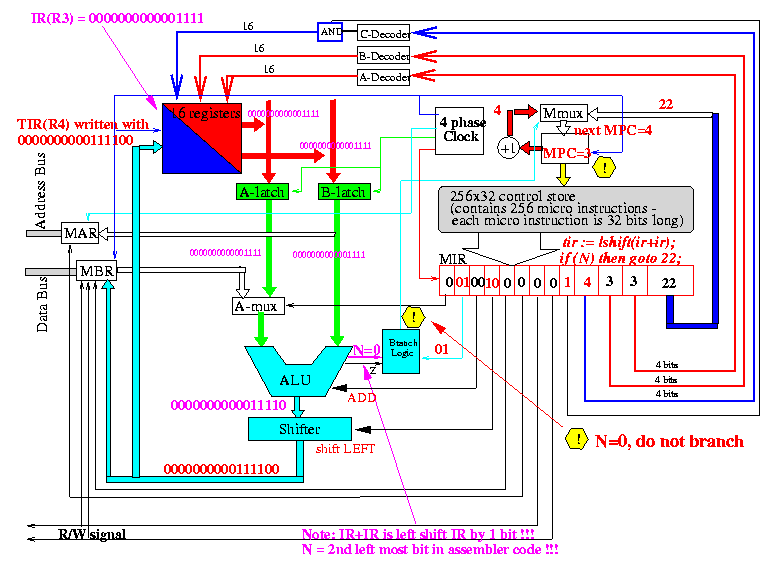
Therefore:
- if instruction code begins with 00... the next micro-program
instruction address (MPC) is 4
- if instruction code begins with 01... the next micro-program
instruction address (MPC) is 22
- Note: we already know the first bit in the assembler instruction is
0 because micro-instruction 3 is only executed when the
left most bit in the assembler instruction is 0
(if it was 1, the micro-program would have branched to
micro-instruction 31)
- The next instruction in the micro-program is:
4: tir := lshift(tir); if n then goto 13;
This micro-instruction forms the following if-construct:
  if ( left most bit in assembler code == 0 )
  {  // This program segment decodes assembler instructions 0???.....

     if ( 2nd left most bit in assembler code == 0 )
     {  // Address 4: program segment decodes 00??.....
     }

        if ( 3rd left most bit in assembler code == 0 )
        {  // Address 5: program segment decodes 000??.....
        }
        else
        {  // Address 13: program segment decodes 001??.....
        }
 ....
Pictorially:
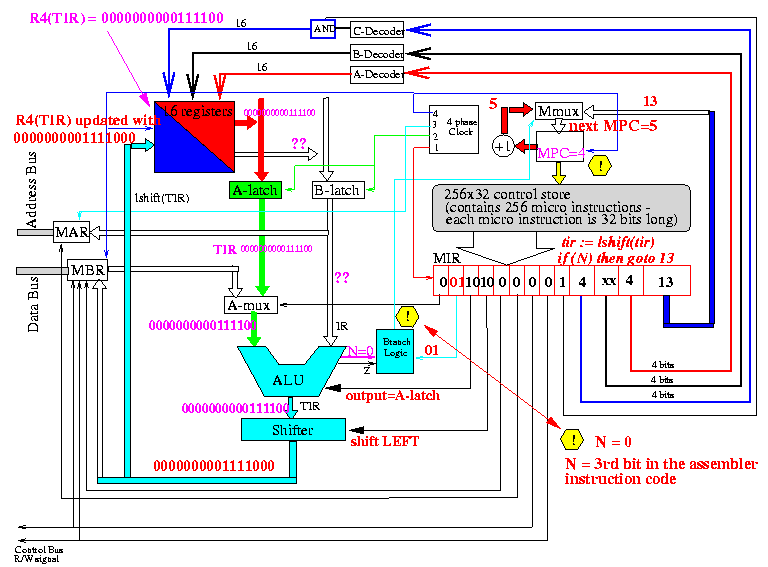
Therefore:
- if instruction code begins with 000... the next micro-program
instruction address (MPC) is 5
- if instruction code begins with 001... the next micro-program
instruction address (MPC) is 13
- In this case, we go to micro-instruction 5.
- The next instruction in the micro-program is:
5: alu := tir; if n then goto 9;
This micro-instruction forms the following if-construct:
  if ( left most bit in assembler code == 0 )
  {  // This program segment decodes assembler instructions 0???.....

     if ( 2nd left most bit in assembler code == 0 )
     {  // Address 4: program segment decodes 00??.....
     }

        if ( 3rd left most bit in assembler code == 0 )
        {  // Address 5: program segment decodes 000??.....

           if ( 3rd left most bit in assembler code == 0 )
           {  // Address 6: program segment handles 0000xxxxx...
           }
           else
           {  // Address 9: program segment handles 0001xxxxx...
           }
        }
  ....
Pictorially:
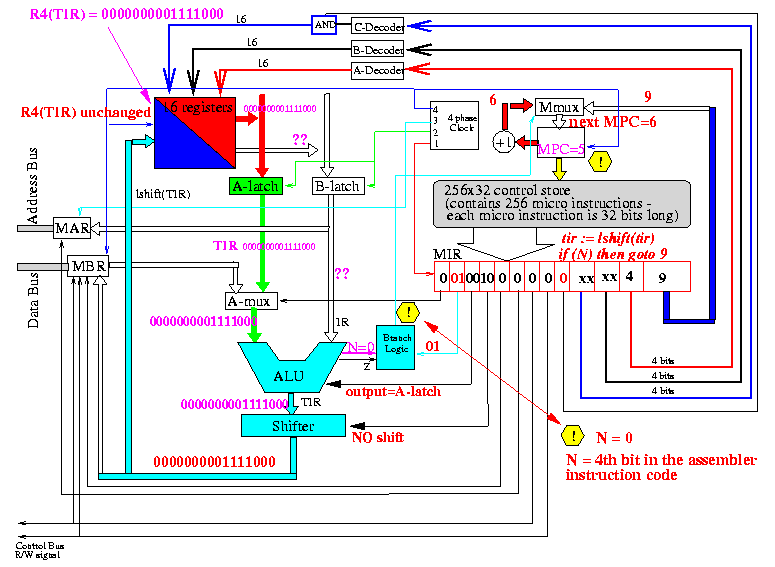
Therefore:
- if instruction code begins with 0000... the next micro-program
instruction address (MPC) is 6
- if instruction code begins with 0001... the next micro-program
instruction address (MPC) is 9
- In this case, we go to micro-instruction 6.
Hooray... the decode process is over.
The only way that the micro-program reaches the micro-instruction
at MPC=6 is when the first 4 bits of the assembler code is
0000....
We know that the assembler instruction is a "load" (read) instruction !
We now enter the next phases of the instruction execution cycle:
(3) fetch operand and (4) execute the assembler instruction.
The program segment that starts at address 6 will instruct the datapath
to perform the "load" (read) operation.
Let's look at it more carefully next...
- The next instruction in the micro-program is:
6: mar := ir; rd;
Pictorially:
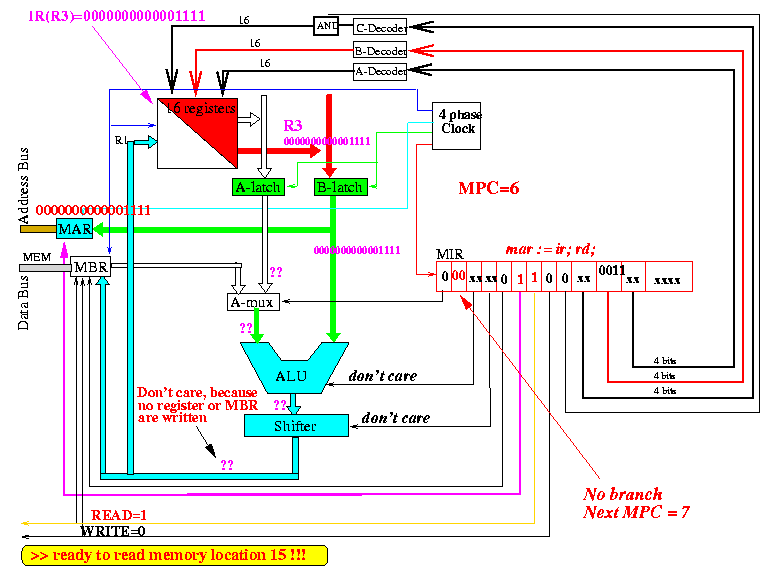
Therefore:
- Address 15 is sentout on the address bus
- The CPU sends out a READ indication to the memory
- The read operation has begun !
- The branch code = 00, so the next MPC = 7 (6+1)
- The next instruction in the micro-program is:
7: rd; mbr;
Pictorially:
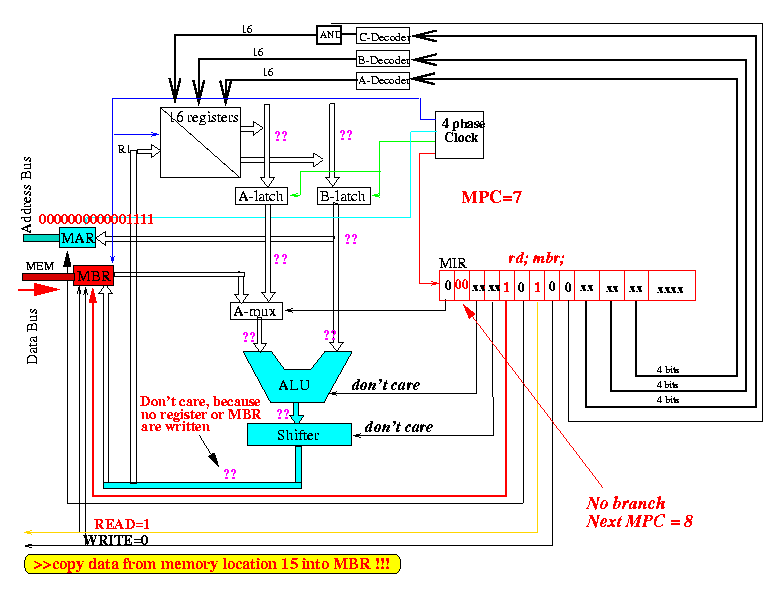
Result:
- The read operation continues...
- The data from memory loction 15 is copied into the MBR
- The branch code = 00, so the next MPC = 8 (7+1)
- The next instruction in the micro-program is:
8: ac := mbr; goto 0;
Pictorially:
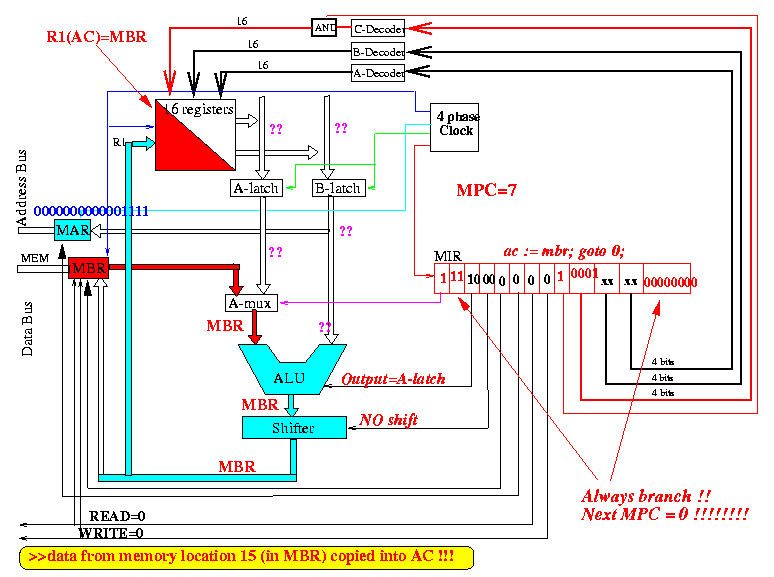
Result:
- The read operation completes...
- The data from memory loction 15 (in MBR) is copied into the AC register
- The branch code = 11, so the next MPC = 0
Notice that MPC = 0 now, and you have seen the micro-instruction
at address 0 before: it fetches an assembler code from memory location
at address given by the PC register.
Since PC has been updated to point to the next assembler instruction,
the CPU will now fetch and execute the next assembler instruction
and the instruction execution cycle is complete (indeed, the CPU
has just read the data from memory location 15 into the
AC register as specified
by the assembler instruction 0000000000001111....
and it moves on to fetch the next assembler instruction (and then decode it
and execute it...)
- DEMO:
(Demo instruction fetch)

- Run:
/home/cs355000/bin/cs355-demo-computer
Do the following:
- Press I, then press r
- Maximize the window
- Toggle key 1 TWICE - this resets the computer
- Toggle key 1 REPEATED and you will see this:
- CPU sends address 0 to memory
- Memory returns the instruction at address 0 (which is:
0000000000001010)
and it will be stored in IR (R3 - the 4th register)
- This instruction is a LOAD instruction
- Keep on toggling key 0 until the CPU fetched
the value 15 (0000000000001111) from memory and stored in ACCU.
- Suppose the instruction fetch phase of the CPU
fetched the assembler instruction code "0001000000001111"
from memory.
As you know, this is the code for the assembler instruction
that moves the word in the AC register to memory location 15.
Note: if you were to program in assembler, you may have
written something like "move AC, 15" and the assembler
will translate this "text" representation into
the assembler code 0001000000001111
So we consider the case that this assembler instruction
is fetched by phase 1 of the instruction execution cycle.
After:
     0:    mar := pc; rd;
     1:    pc := pc + 1; rd; mbr;
the MBR contains 0001000000001111.
- Consider the next instruction in the micro-program:
2: ir := mbr; if n then goto 31;
This micro-instruction forms the following if-construct:
  if ( left most bit in assembler code == 0 )
  { // Address 3: program segment decodes assembler instructions 0???.....
  }
  else
  { // Address 31: program segment decodes assembler instructions 1???.....
  }
Pictorially:
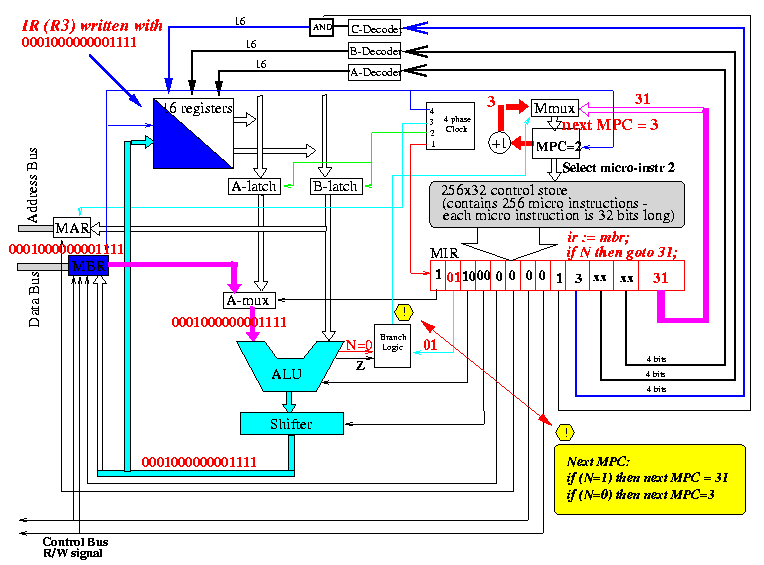
- The assembler instruction 0001000000001111 is copied into the IR register
- The CPU tests and finds the left most bit of the assembler instruction
is equal to 0 and will not branch.
- Since the first bit of the assembler instruction is 0
and the next MPC value is 3.
- The next instruction in the micro-program is:
3: tir := lshift(ir + ir); if n then goto 22;
This micro-instruction forms the following if-construct:
  if ( left most bit in assembler code == 0 )
  {  // This program segment decodes assembler instructions 0???.....

     if ( 2nd left most bit in assembler code == 0 )
     {  // Address 4: program segment decodes 00??.....
     }
     else
     {  // Address 22: program segment decodes 01??.....
     }
Pictorially:
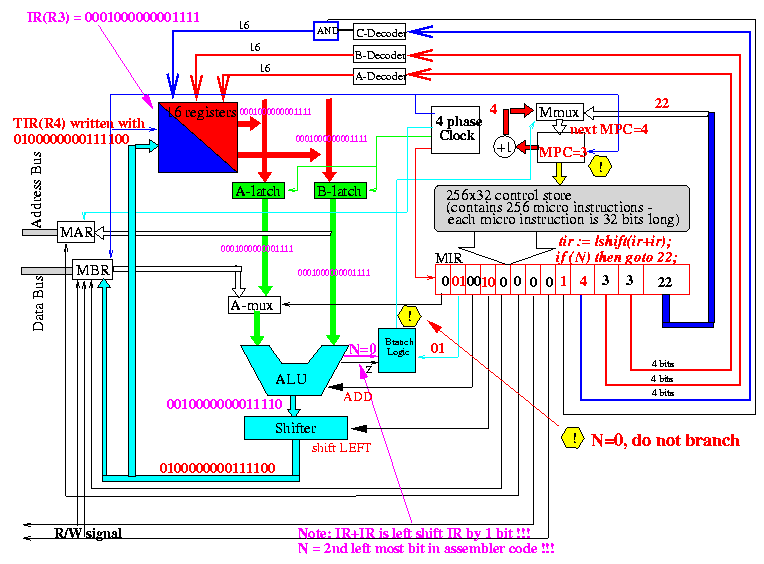
Therefore:
- if instruction code begins with 00... the next micro-program
instruction address (MPC) is 4
- if instruction code begins with 01... the next micro-program
instruction address (MPC) is 22
- Note: we already know the first bit in the assembler instruction is
0 because micro-instruction 3 is only executed when the
left most bit in the assembler instruction is 0
(if it was 1, the micro-program would have branched to
micro-instruction 31)
- The next instruction in the micro-program is:
4: tir := lshift(tir); if n then goto 13;
This micro-instruction forms the following if-construct:
  if ( left most bit in assembler code == 0 )
  {  // This program segment decodes assembler instructions 0???.....

     if ( 2nd left most bit in assembler code == 0 )
     {  // Address 4: program segment decodes 00??.....
     }

        if ( 3rd left most bit in assembler code == 0 )
        {  // Address 5: program segment decodes 000??.....
        }
        else
        {  // Address 13: program segment decodes 001??.....
        }
 ....
Pictorially:
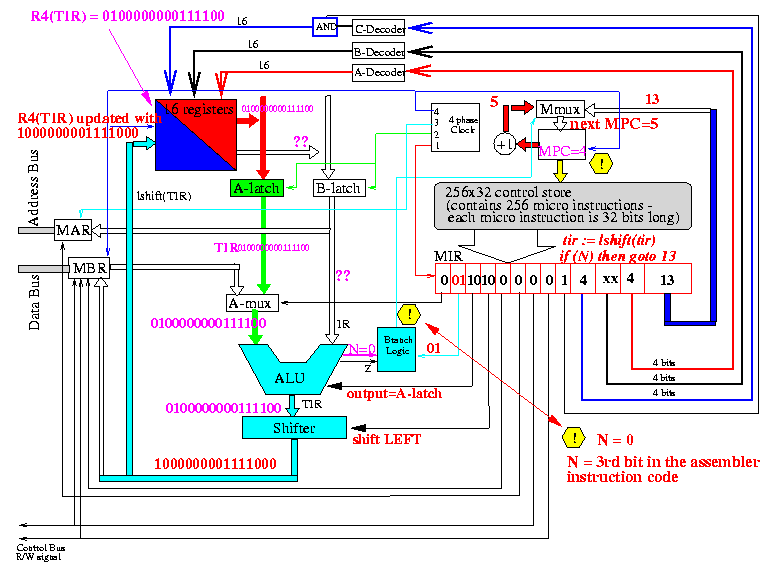
Therefore:
- if instruction code begins with 000... the next micro-program
instruction address (MPC) is 5
- if instruction code begins with 001... the next micro-program
instruction address (MPC) is 13
- In this case, we go to micro-instruction 5.
- The next instruction in the micro-program is:
5: alu := tir; if n then goto 9;
This micro-instruction forms the following if-construct:
  if ( left most bit in assembler code == 0 )
  {  // This program segment decodes assembler instructions 0???.....

     if ( 2nd left most bit in assembler code == 0 )
     {  // Address 4: program segment decodes 00??.....
     }

        if ( 3rd left most bit in assembler code == 0 )
        {  // Address 5: program segment decodes 000??.....

           if ( 3rd left most bit in assembler code == 0 )
           {  // Address 6: program segment handles 0000xxxxx...
           }
           else
           {  // Address 9: program segment handles 0001xxxxx...
           }
        }
  ....
Pictorially:
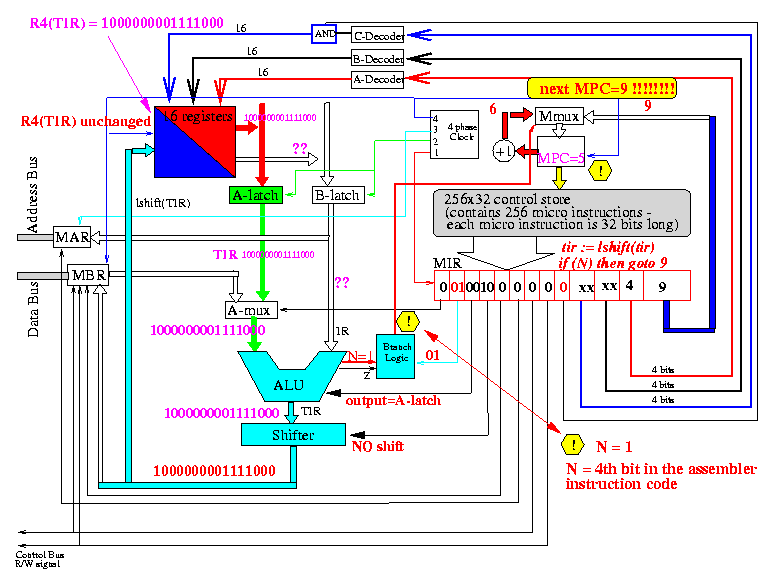
Therefore:
- if instruction code begins with 0000... the next micro-program
instruction address (MPC) is 6
- if instruction code begins with 0001... the next micro-program
instruction address (MPC) is 9
- In this case, we go to micro-instruction 9 !!!
Hooray... the decode process is over.
The only way that the micro-program reaches the micro-instruction
at MPC=9 is when the first 4 bits of the assembler code is
0001....
We know that the assembler instruction is a "store" (write) instruction !
We now enter the next phases of the instruction execution cycle:
(3) fetch operand and (4) execute the assembler instruction.
The program segment that starts at address 9 will instruct the datapath
to perform the "store" (write) operation.
Let's look at it more carefully next...
- The next instruction in the micro-program is:
9: ir := ir and r8;
Pictorially:
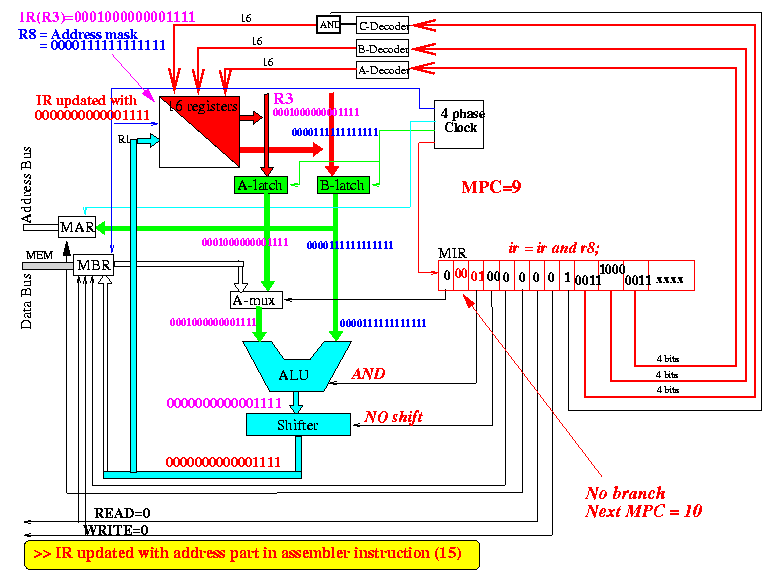
Therefore:
- This AND operation is also know as "masking".
- It "extracts" the address portion from the whole assembler
instruction
- Now the IR register contains the address (15) and
we are ready to perform the write operation...
- The branch code = 00, so the next MPC = 10 (9+1)
- The next instruction in the micro-program is:
10: mar := ir; mbr := ac; wr;
Pictorially:
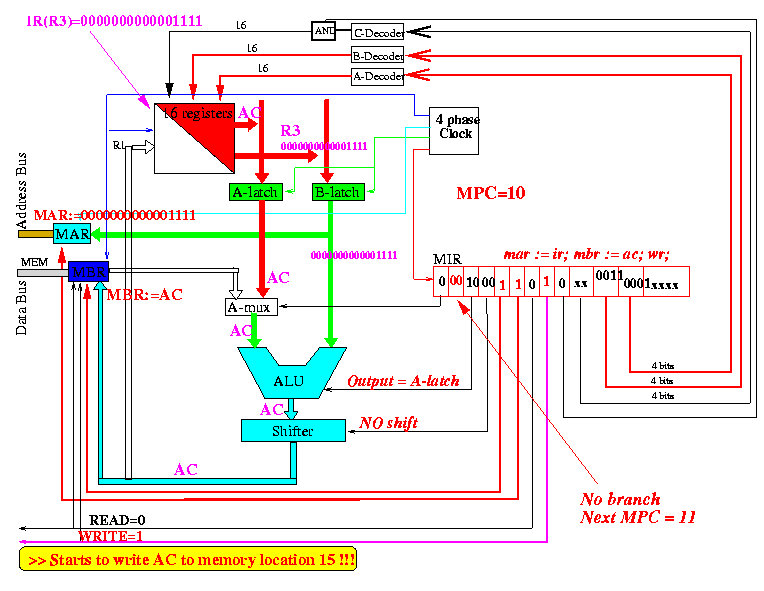
Result:
- MAR is written with the value 15, which is the address
that the assembler instruction 0001000000001111 wants to update.
- MBR is written with the value in register AC, which is the
value that the assembler instruction 0001000000001111
uses in the write operation.
- The CPU also sends out a WRITE indication.
- So the write instruct has started....
- The branch code = 00, so the next MPC = 11 (10+1)
- The next instruction in the micro-program is:
11: wr; goto 0;
Pictorially:
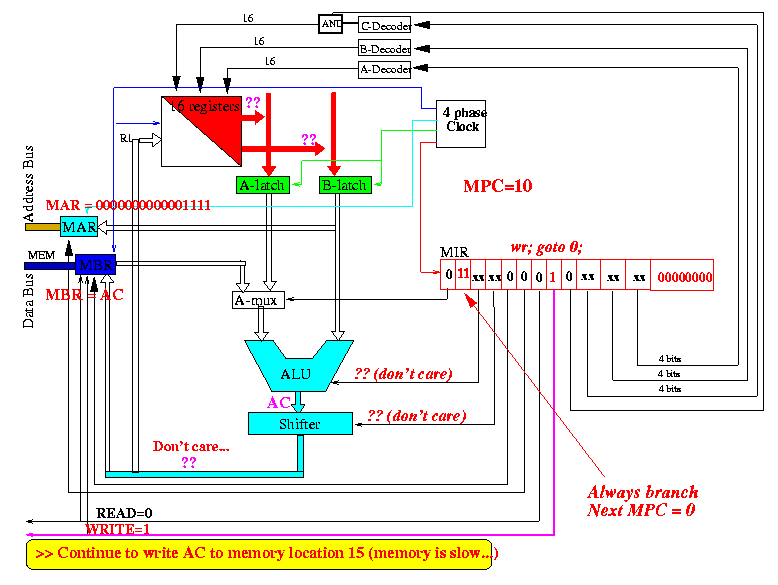
Result:
- The write operation completes...
- The MBR data (= AC) is given more time to get written to
memory location 15 (in MAR).
- The branch code = 11, so the next MPC = 0
Again, notice that MPC = 0 now, and you have seen the micro-instruction
at address 0 before: it fetches an assembler code from memory location
at address given by the PC register.
Since PC has been updated to point to the next assembler instruction,
the CPU will now fetch and execute the next assembler instruction
and the instruction execution cycle is complete (indeed, the CPU
has just written AC to memory location 15 as specified
by the assembler instruction 0001000000001111....
- DEMO:
(Demo instruction fetch)
- Run:
/home/cs355000/bin/cs355-demo-computer
Do the following:
- Press I, then press r
- Maximize the window
- Toggle key 1 TWICE - this resets the computer
- Toggle key 1 REPEATED and you will see this:
- CPU sends address 0 to memory
- Memory returns the instruction at address 0 (which is:
0000000000001010)
and it will be stored in IR (R3 - the 4th register)
- This instruction is a LOAD instruction
- Keep on toggling key 0 until the CPU fetched
the value 15 (0000000000001111) from memory and stored in ACCU.
- After this, the CPU will fetch the second instruction
(in memory addres 1).
- This instruction is a STORE instruction (STORE 72),
which will store ACCU into memory location 72.